

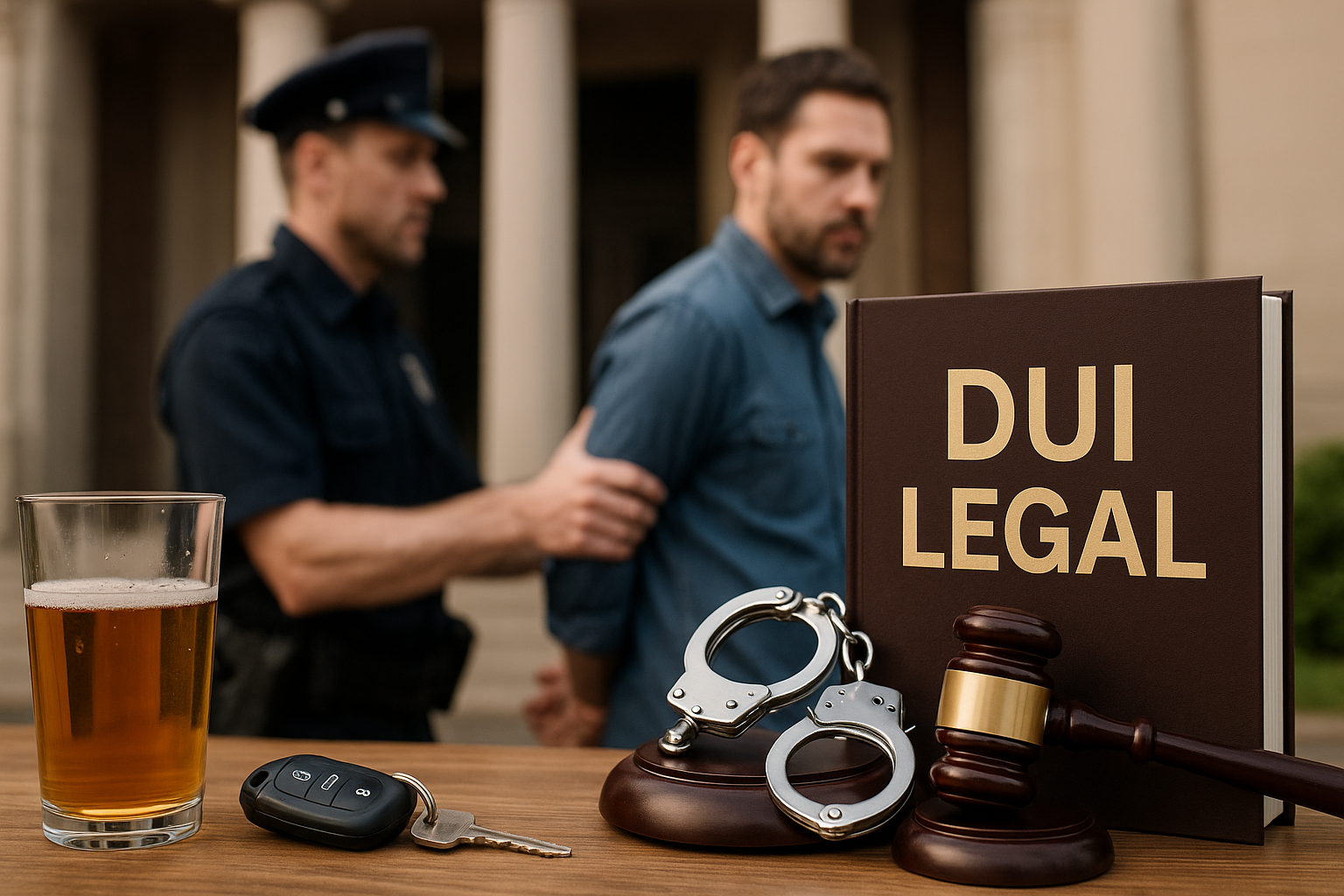
Driving Under the Influence (DUI) is a serious offense with legal, financial, and personal consequences. Whether it’s your first arrest or a repeat offense, understanding the DUI legal process can help you prepare for what lies ahead and make informed decisions. This article breaks down each stage of the DUI legal process, from the initial arrest to the court proceedings, so you know what to expect.
1. The DUI Arrest
The legal process begins with a traffic stop or an encounter at a DUI checkpoint. Law enforcement must have reasonable suspicion that a driver is impaired due to alcohol, drugs, or a combination of both.
a. Field Sobriety Tests (FSTs)
If the officer suspects impairment, you may be asked to perform field sobriety tests, such as:
- Walk-and-turn
- One-leg stand
- Horizontal gaze nystagmus test (eye movement)
These tests help officers determine whether there is probable cause for an arrest.
b. Preliminary Breath Test (PBT)
A roadside breathalyzer may be administered. While you can often refuse a PBT in many jurisdictions without immediate legal consequences, doing so might still lead to arrest based on observed impairment.
2. The Arrest and Chemical Testing
If you fail the FSTs or the officer otherwise believes you are impaired, you will be arrested and taken to a police station, hospital, or jail.
a. Implied Consent Laws
Upon arrest, you will be asked to submit to a chemical test — usually a breath, blood, or urine test. By driving, you’ve legally consented to this testing under implied consent laws. Refusal can lead to:
- Automatic license suspension
- Fines
- Use of your refusal as evidence in court
b. Blood Alcohol Concentration (BAC)
A BAC of 0.08% or higher is the legal limit in most states for drivers over 21. Lower limits may apply to commercial drivers and those under 21.
3. Booking and Release
After testing, you’ll be booked — meaning your photo and fingerprints will be taken. Depending on the severity of the offense and your criminal history, you may be:
- Released on bail
- Released on your own recognizance (a promise to appear in court)
- Held in jail until a court hearing
4. Administrative License Suspension (ALS)
Most states have an administrative process separate from the criminal court system. If you fail or refuse the chemical test, your license may be automatically suspended by the DMV.
a. Requesting a Hearing
You often have a limited window (e.g., 7–10 days) to request a DMV hearing to challenge the suspension. This hearing is separate from your criminal trial and focuses solely on your driving privileges.
5. Hiring a DUI Attorney
Before your court date, it’s strongly advised to consult a DUI lawyer Toronto. DUI law is complex and varies by state. A good attorney can:
- Review the legality of the stop and arrest
- Challenge the accuracy of the breathalyzer or blood test
- Represent you in both administrative and criminal proceedings
- Negotiate plea deals or argue for reduced charges
6. Arraignment
The arraignment is your first court appearance, where you will:
- Hear the formal charges against you
- Enter a plea (Guilty, Not Guilty, or No Contest)
If you plead not guilty, the case will proceed to pretrial and possibly trial. If you plead guilty or no contest, sentencing may happen immediately or at a later hearing.
7. Pretrial Proceedings
This phase involves evidence gathering and legal motions. Your attorney may:
- File motions to suppress illegally obtained evidence
- Challenge the validity of the chemical tests
- Negotiate with the prosecutor for a plea bargain
In many DUI cases, a plea bargain is reached during this phase, resulting in reduced charges or alternative sentencing.
8. The Trial (if no plea deal is made)
If your case goes to trial, it will typically be a bench trial (judge only) or jury trial (if requested). The prosecution must prove beyond a reasonable doubt that you were:
- Operating a vehicle, and
- Under the influence or had a BAC over the legal limit.
a. Defense Strategies May Include:
- Improper stop or arrest procedure
- Faulty breathalyzer calibration or operator error
- Medical conditions that mimic intoxication
- Inaccurate field sobriety testing
You can testify in your own defense, though it’s not required.
9. Sentencing
If found guilty or after a guilty plea, the judge will impose a sentence based on:
- State laws
- Your BAC level
- Whether it’s your first, second, or subsequent offense
- Aggravating factors (e.g., child in car, accident)
a. Common DUI Penalties Include:
- Fines and court fees
- License suspension or revocation
- Probation
- Mandatory DUI education programs
- Ignition interlock device (IID) installation
- Jail time (especially for repeat offenses)
10. Post-Conviction and Appeals
After conviction, you may be able to appeal your case, especially if there were legal errors or violations of your rights during the arrest or trial.
Additionally, some states allow for expungement or record sealing after a certain period and completion of all sentence terms, especially for first-time offenders.
Final Thoughts
Being charged with DUI can be overwhelming, but understanding the legal process can help reduce stress and improve your ability to navigate the system. Key takeaways:
- Know your rights during a traffic stop
- Take implied consent laws seriously
- Get legal counsel early in the process
- Don’t delay in requesting a DMV hearing if applicable
- Consider all legal options, including plea deals
Every DUI case is unique, and outcomes depend on numerous factors — from your BAC level to the conduct of the arresting officer. With the right legal help and a proactive approach, you can minimize the damage and work toward moving forward with your life.
