

Most car accidents in Burbank happen on an ordinary day. You’re driving to work on Olive Avenue, picking up a friend at Hollywood Burbank Airport, or merging onto the I-5. Then, in a few seconds, everything changes.
The first 24 hours after a crash matter more than most people think. What you do in that window can protect your health, your car repairs, and any injury claim later. Here’s a simple, step-by-step guide.
Step 1: Get Safe and Call for Help
If anyone is hurt, call 911 right away. If the cars can move and no one is badly injured, pull out of traffic and turn on your hazard lights.
Who responds depends on where you are. Burbank Police handle crashes on city streets. The California Highway Patrol handles crashes on the I-5 and SR-134. Either way, don’t leave the scene. California law requires drivers to stop when someone is hurt (Vehicle Code § 20001).
Step 2: Swap Information With the Other Driver
California requires drivers involved in a crash to exchange information. Before you leave, get these details from the other driver:
- Name and address
- Driver’s license number
- Insurance company and policy number
- License plate, plus the car’s make and model
Keep the conversation short and calm. Don’t argue about who caused it. Saying “I’m sorry” is a natural reaction, but it can later be taken as admitting fault.
Step 3: Take Photos and Look for Cameras
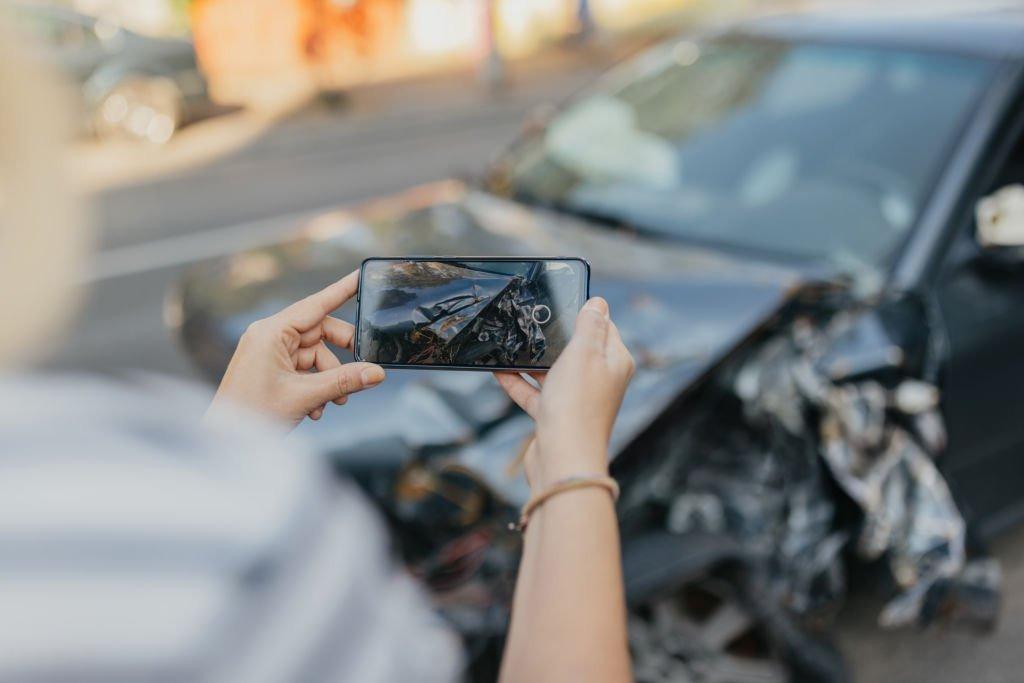
Your phone is the best tool you have at the scene. Take photos of every car, the damage, the license plates, the traffic lights and signs, and any injuries you can see.
Then look around for cameras. Many shops on Magnolia Boulevard and Victory Boulevard have security cameras, and many homes have doorbell cameras. That footage is often recorded over within days, so ask for it quickly. Also get names and phone numbers from anyone who saw the crash.
Step 4: See a Doctor the Same Day
A lot of people say “I’m fine” at the scene and wake up the next morning in pain. Adrenaline hides injuries. Whiplash, concussions and back injuries often show up hours or even days later.
Getting checked the same day protects your health first. It also creates a medical record that connects your injuries to the crash. Insurance companies often point to a gap between the accident and the first doctor visit to argue the injury came from something else.
Step 5: Be Careful on the Phone With Insurance
Tell your own insurance company about the crash soon. The other driver’s insurer may also call you, sometimes within a day, and ask for a recorded statement.
You don’t have to give them one. If you do talk, stick to the basic facts. Don’t guess about your speed, and don’t say you’re not hurt before a doctor has checked you. Don’t sign anything or accept a quick check until you know how serious your injuries are.
Step 6: Write Down Your Deadlines
A few deadlines start running on the day of the crash:
- 10 days: report the crash to the DMV on an SR-1 form if anyone was hurt or the damage is over $1,000. This applies even if the police made a report.
- 6 months: file a written claim if a government vehicle was involved, such as a city truck or a BurbankBus (Government Code § 911.2).
- 2 years: file an injury lawsuit in most other cases (Code of Civil Procedure § 335.1).
The six-month deadline catches many people off guard. If a public vehicle was involved, don’t wait.
Small Steps Now Make a Big Difference Later
None of these steps takes long. A few photos, a doctor visit and a careful phone call can decide how an injury claim goes months from now.
At the Law Offices of Adrianos Facchetti, our office is right here in Burbank. Most of the car accident cases in Burbank that I see come down to the same thing: the evidence gathered in that first day. If you’ve just been in a crash, start with your health, then your phone camera.
About the Author
Adrianos Facchetti is a California personal injury attorney (State Bar #243213). He founded the Law Offices of Adrianos Facchetti in 2006, with its office at 4444 W. Riverside Dr., Suite 308, in Burbank. He holds an AV Preeminent rating from Martindale-Hubbell, serves on the Burbank Transportation Commission, and works with clients in English, Spanish, and Portuguese.
This article provides general information about California law and is not legal advice. Every case depends on its own facts.
