

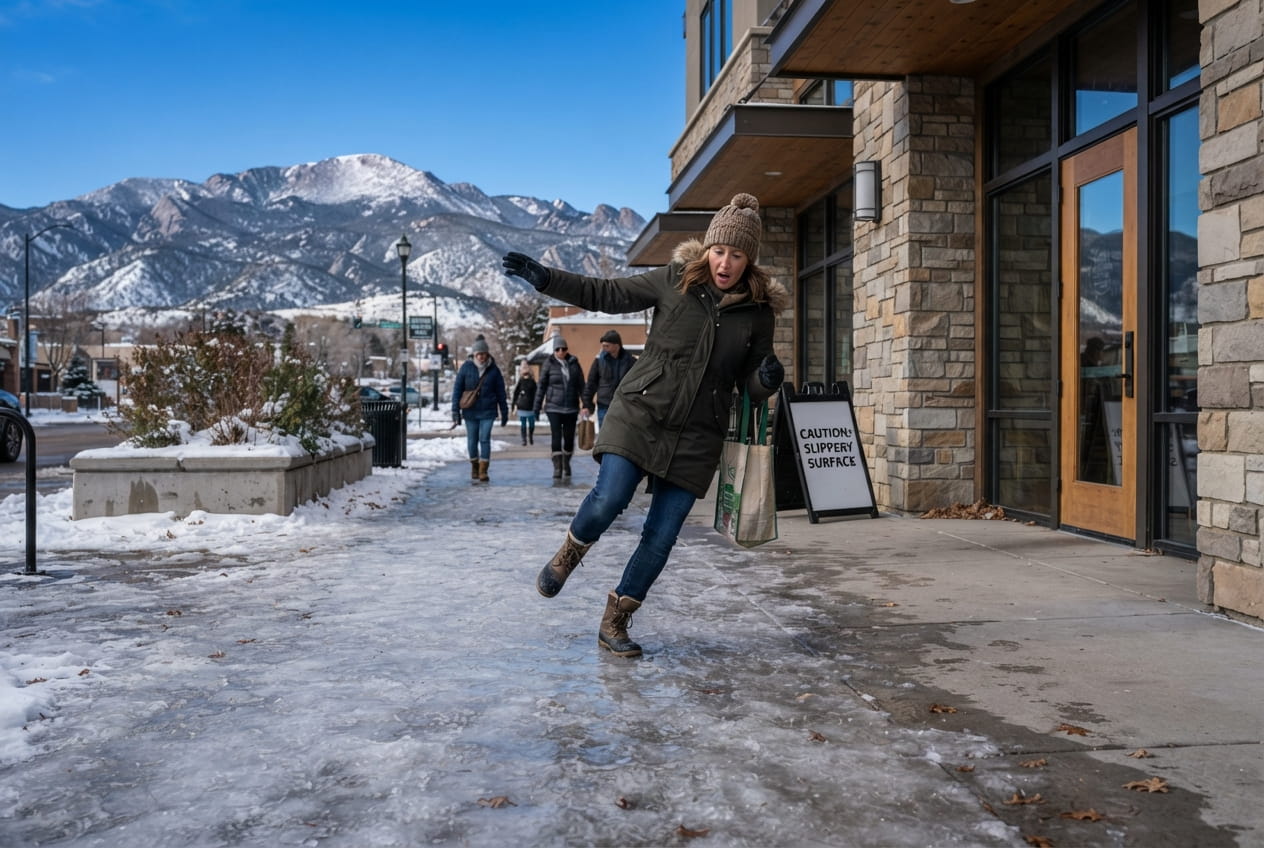
Winter in Colorado Springs can be beautiful. Snow on Pikes Peak, crisp blue skies, and quiet mornings make the season special. But the same weather that draws people to the Front Range also creates a hidden danger at ground level. Sidewalks, parking lots, and building entrances can turn into sheets of ice, especially when sunny afternoons melt snow that refreezes overnight.
Slip and fall injuries from ice are common, and they can be serious. Broken wrists, hip fractures, back injuries, and head trauma often follow a hard fall. When a fall happens on someone else’s property, an important question arises: who is responsible?
Why Ice Is So Dangerous in Colorado Springs
Colorado Springs sits at more than 6,000 feet, and its weather can change quickly. A storm may drop several inches of snow, followed by a warm, sunny day. Snow melts off roofs and piles, then refreezes into black ice once the sun goes down. This freeze and thaw cycle can repeat many times each winter.
Black ice is especially hazardous because it is nearly invisible. A sidewalk can look wet or clear when it is actually slick. Areas under gutters, downspouts, and shaded overhangs are common trouble spots, as are parking lots where plowed snow is piled up and allowed to drain across walkways.
Older adults face the highest risk of serious injury. According to the Centers for Disease Control and Prevention, falls are the leading cause of injury among adults aged 65 and older in the United States. In a city with a large population of retirees and military veterans, icy walkways are a real public health concern.
How Colorado Premises Liability Law Works
Colorado has a specific law that governs injuries on someone else’s property, known as the Premises Liability Act. The general idea of premises liability is that property owners and occupiers have a duty to keep their property reasonably safe for visitors. Colorado’s version of this rule sorts visitors into three categories, and the level of care owed depends on which category applies.
Invitees are people who come onto property for business reasons or because the public is invited, such as shoppers in a store or guests at a hotel. Owners owe invitees the highest duty. They must use reasonable care to protect them against dangers the owner knew about or should have known about.
Licensees are people who are on the property with permission for their own purposes, such as social guests. Owners must warn licensees about or fix dangers they actually know about.
Trespassers are people with no right to be on the property. Owners generally only have to avoid deliberately harming them.
For most icy sidewalk cases involving businesses, apartment complexes, and public buildings, the injured person is an invitee. That means the question is whether the owner knew or should have known about the ice and failed to take reasonable steps, such as shoveling, salting, sanding, or putting up warning signs. Experienced Colorado Springs slip and fall lawyers often focus on exactly this question, looking at how long the ice was there and what the owner did about it.
Local rules can also matter. The City of Colorado Springs requires property owners and occupants to clear snow and ice from sidewalks next to their property within a set period after a storm. Failing to follow these rules may help show that an owner did not act reasonably.
Building a Strong Slip and Fall Claim
Ice cases often come down to evidence, and ice does not last. By the time an insurance adjuster visits the scene, the weather may have changed completely. That makes quick action important.
If you fall on ice and are able to do so, take photos of the area right away, including any lack of salt or sand and nearby gutters or downspouts. Note the time, the weather, and whether there were any warning signs. Report the fall to the property owner or manager and ask for a copy of any incident report. Get the names of anyone who saw the fall.
Other useful evidence may include:
- Weather records showing when snow fell and when temperatures dropped
- Surveillance video from the property
- Snow removal logs or contracts with a plowing company
- Prior complaints about the same area
- Medical records describing your injuries
Property owners and their insurers often begin building a defense right away. An attorney can send preservation letters to make sure video footage and maintenance records are not deleted.
Comparative Fault and Deadlines
Property owners and insurers frequently argue that the injured person should have been more careful. They may say the person was wearing the wrong shoes, looking at a phone, or walking in an area that was obviously icy.
Colorado uses a modified comparative negligence rule. An injured person can recover damages as long as their share of fault is less than that of the property owner. Any award is reduced by the injured person’s percentage of fault. If the injured person is found to be 50 percent or more at fault, they cannot recover.
Time limits also apply. In Colorado, most premises liability and negligence claims must be filed within two years of the injury. Claims against government entities, such as a fall on a city sidewalk or at a public building, can require formal written notice within 182 days. Missing these deadlines can end a claim before it begins.
Icy sidewalks are part of life in Colorado Springs, but serious injuries do not have to be. Property owners have a responsibility to keep their walkways reasonably safe, and when they fall short, injured people have options. Documenting the scene, getting medical care, and understanding your rights are the best ways to protect yourself after a winter fall.
