

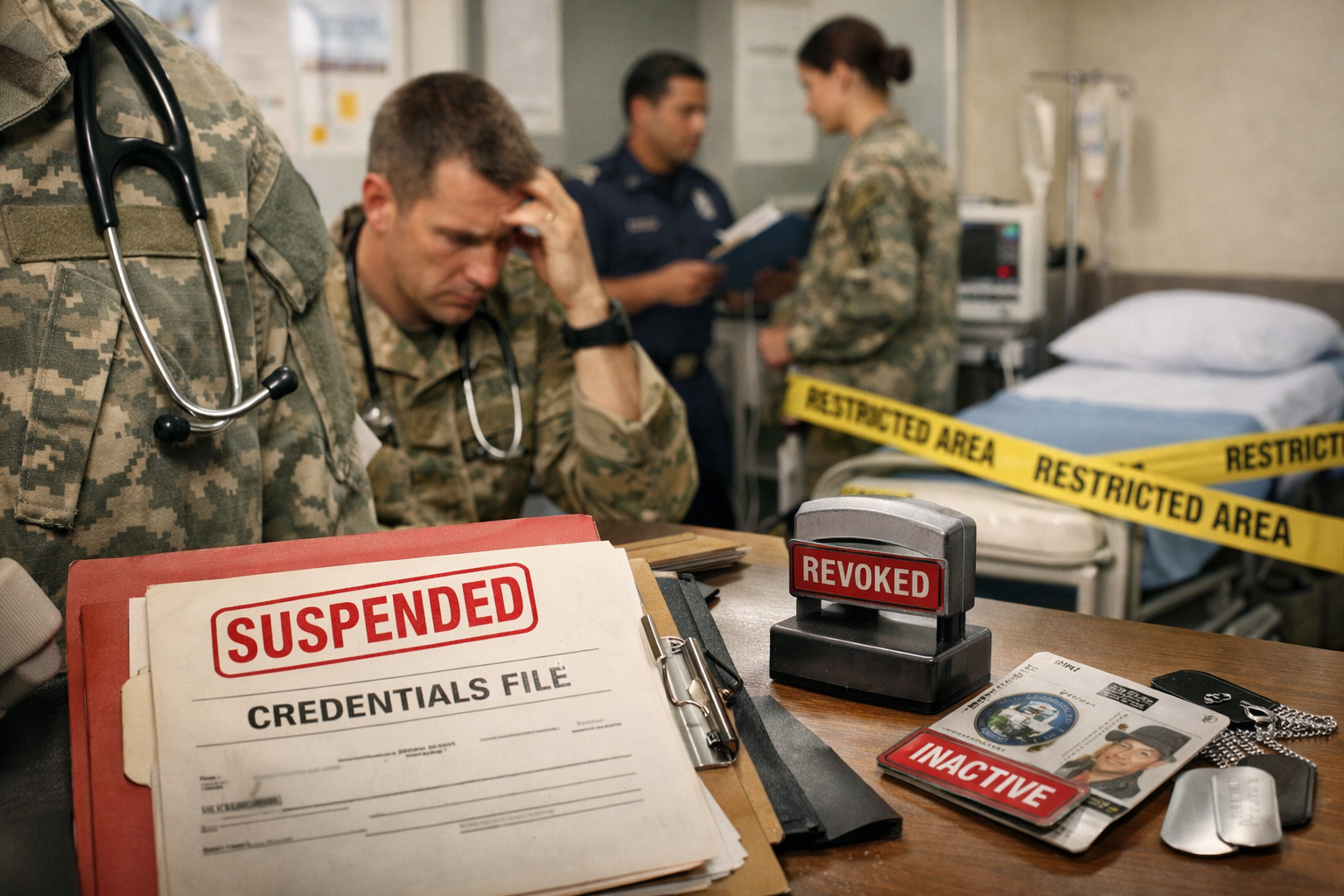
When your military medical credentialing comes under fire, your career, income, and reputation can all be on the line at once. A suspension or revocation is not just paperwork. It is a direct threat to your ability to treat patients, keep your billet, and support your family. You may feel blindsided, ashamed, or angry. You may also feel alone. You are not. Commanders, legal staff, and credentialing boards move fast once concerns arise. You must respond with the same speed and focus. This blog explains what actually happens when your credentials are suspended or revoked, what rights you still have, and how to protect your future. It also points you toward resources like defendyourservice.com so you can get support that understands military rules and culture. You already carry heavy weight for your country. You should not carry this fight without clear facts and a plan.
What Military Medical Credentials Actually Do For You
Your credentials do three things.
- They confirm you are trained and licensed
- They give you clinical privileges at a military treatment facility
- They support your fitness for duty and career path
Without current credentials you cannot see patients. You also risk loss of special pays, changes in duties, and questions about your future assignments. The impact reaches your home life fast.
Common Triggers For Suspension Or Revocation
Credentialing action usually follows one or more clear triggers. You need to know what they are so you can respond with facts.
- Clinical concerns such as repeated errors, near misses, or poor documentation
- Impairment concerns such as alcohol use, drug use, or untreated mental health conditions
- Professional conduct issues such as harassment, boundary violations, or dishonesty
- Administrative issues such as lapsed license, expired board certification, or missing training
- Adverse actions from a state board or national certifying body
Sometimes a single event starts the process. Other times a pattern builds over months. Either way, you deserve a clear explanation in writing.
What A Suspension Means For Your Daily Life
Suspension is often the first step. It can be temporary or it can lead to permanent loss. During a suspension you usually face tight limits on practice.
Comparison of Suspension and Revocation
| Factor | Suspension | Revocation |
|---|---|---|
| Clinical practice | Stopped or sharply limited during review | Stopped with no current path to restore |
| Pay and special pays | Base pay may continue. Special pays can stop | Loss of clinical pays. Risk to career and future pay |
| Duty status | Reassigned to admin or non clinical tasks | Possible separation or reclassification |
| Record impact | Documented but may be resolved | Serious long term impact on career and licenses |
| Future options | Possible return to practice with conditions | Very hard to regain privileges anywhere |
During suspension you may feel useless and exposed. You still have rights and you still have a voice.
What Revocation Means For Your Career
Revocation is loss of privileges and often loss of credentials. It can follow a suspension or happen after a major event. Once revoked, you face three hard hits.
- Your current clinical role ends
- Your record shows an adverse action that must be reported
- Your civilian future in medicine can come under threat
Military facilities report certain actions to national data systems. For example, the National Practitioner Data Bank keeps records that many employers check. You need to understand if your case will be reported and what that means for you and your family.
How The Credentialing Process Usually Unfolds
The process can move fast. It still follows a rough path. Knowing the steps reduces fear.
- Concern raised. A report comes from a coworker, patient, supervisor, or outside agency
- Initial review. The privileging authority looks at records and may speak with witnesses
- Interim action. Your privileges may be limited or suspended during review
- Formal review. A peer review or credentials committee studies the facts
- Recommendation. The committee suggests suspension, revocation, limits, or no action
- Command decision. The commander or director makes the final call
- Appeal. You may have a right to appeal within clear time limits
Each service has rules that guide these steps. You can review general guidance in Department of Defense instructions on credentialing and privileging found through official sources like Health.mil. Written rules matter. They can protect you when emotions run high.
Your Rights During Suspension Or Revocation
You still have rights even when you feel powerless. You usually have the right to
- Receive written notice of the concerns and proposed actions
- Review records used in the decision
- Submit your own written statement and evidence
- Seek legal counsel through military or civilian lawyers
- Ask for a hearing or appeal if policy allows
You also have the right to medical care and support. Stress from credentialing action can harm your health and home. Asking for help is not weakness. It is survival.
How To Protect Yourself And Your Family
You cannot control every decision. You can control how you respond. Three steps help protect you and your family.
- Stay organized. Keep copies of emails, memos, evaluations, and training records
- Speak early. Talk with legal counsel and trusted mentors as soon as you get notice
- Care for your health. Use mental health, chaplain, or family support services
You may also need to talk with state boards or national bodies if they learn of the action. Fast honest contact can reduce damage later.
Planning For Life After A Credentialing Crisis
Some cases end with return to practice. Others end with career change. Either way, you and your family deserve a plan.
- If you return to practice, expect closer review, training plans, or limits on certain procedures
- If you leave clinical work, explore non clinical roles that use your skills
- If you separate from service, prepare to explain the event to civilian employers in clear and honest terms
You gave years of effort and sacrifice. One crisis does not erase your worth. With clear facts, strong support, and steady choices, you can move through this season with your dignity intact and your future still open.
