

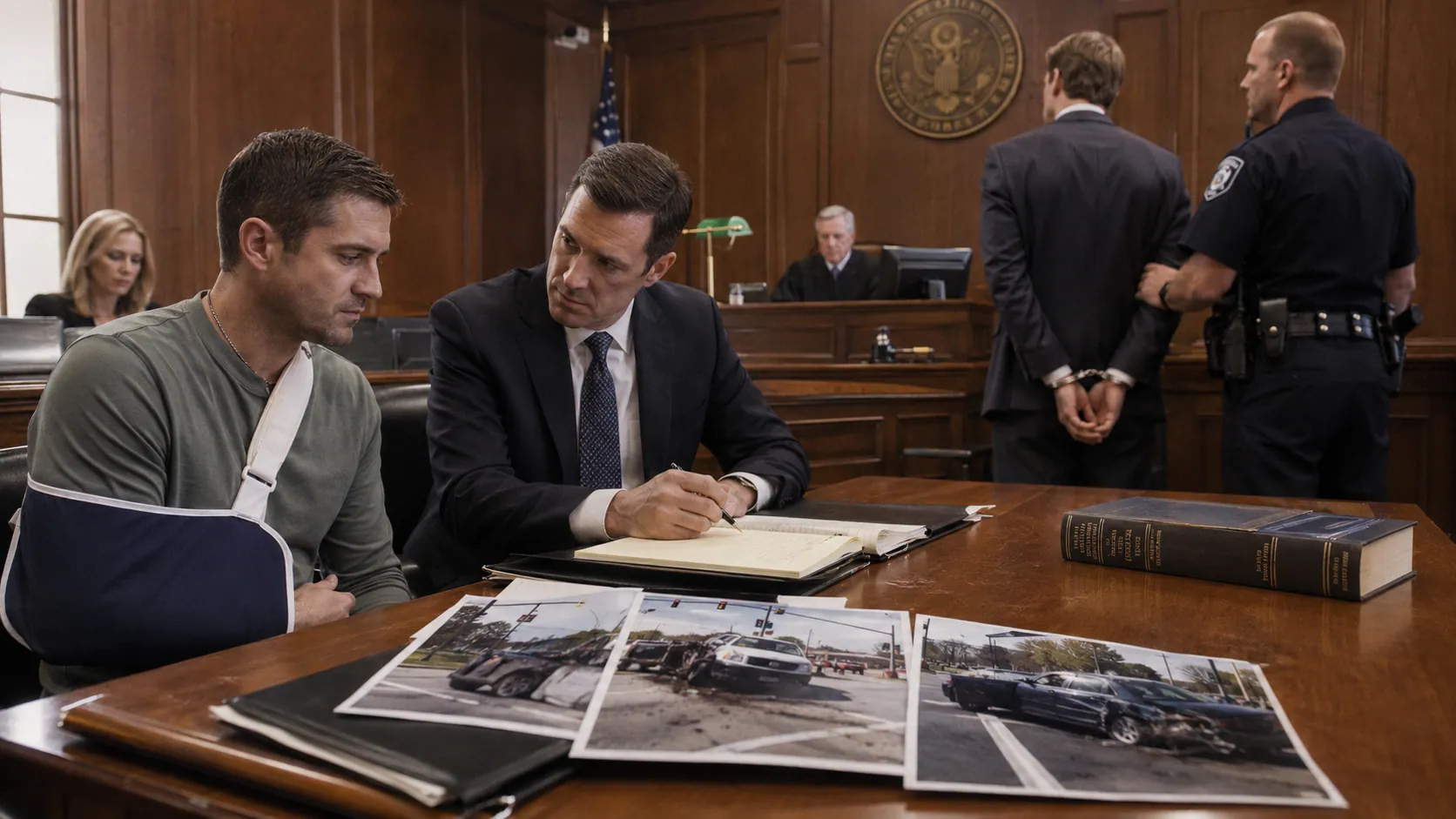
Not every accident stays an accident. Sometimes a moment of negligence — a driver running a red light, a property owner ignoring a broken staircase, a contractor cutting corners on safety — crosses a line that the law treats very differently from a simple civil dispute. When that happens, the same incident can trigger two separate legal processes at the same time: a civil lawsuit and a criminal case. Understanding how these two systems interact can make a real difference in the outcome you get, whether you’re the person who was hurt or the person facing charges.
If you’ve been injured on someone else’s property in South Carolina, consulting a Greenville Premises Liability Lawyer early gives you a clear picture of where your civil case stands even if the police are still investigating the same incident. And if you’re a defendant whose case went to trial and didn’t end the way it should have, a criminal appeal lawyer can be the difference between living with a wrongful conviction and getting a second shot at justice.
When an Accident Becomes a Crime
Most personal injury cases are handled entirely in civil court. Someone gets hurt, liability is disputed, damages are negotiated or litigated, and the matter resolves without police involvement. But certain fact patterns push a case into criminal territory fast.
Drunk driving crashes are the clearest example. A DUI accident injures another driver — the injured victim has a civil personal injury claim against the at-fault driver, but the state also files criminal charges for DUI, reckless endangerment, or vehicular assault. Both cases move forward simultaneously, with different standards of proof and different goals: the civil case aims to compensate the victim, the criminal case aims to punish the conduct.
The same dynamic plays out in premises liability situations. Say a nightclub ignores repeated reports of a malfunctioning fire exit. A stampede happens, people are injured. The property owner faces a civil premises liability lawsuit from injured guests. But if investigators find that management knowingly concealed the hazard or falsified inspection records, criminal negligence or even reckless endangerment charges can follow.
Workplace fatalities follow a similar pattern. When an employer’s safety violations cause a worker’s death, OSHA fines and a wrongful death civil lawsuit may be filed alongside criminal charges against company executives or site supervisors.
Two Cases, Two Courts, One Set of Facts
What makes these situations complicated is that civil and criminal law operate on different rules — even when they’re built on the exact same incident.
Standard of proof is the big one. Criminal cases require proof “beyond a reasonable doubt,” which is an intentionally high bar to clear. Civil cases use a “preponderance of the evidence” standard, meaning the plaintiff only needs to show it’s more likely than not that the defendant was at fault. This is why O.J. Simpson was acquitted of murder but lost the civil wrongful death suit brought by the victims’ families — the same facts, two different outcomes under two different standards.
Who controls the case is another key difference. In a criminal case, the government prosecutes — the victim has no direct control over whether charges are filed or dropped. In a civil case, the injured party is the one driving the lawsuit. This matters because a DA can choose not to prosecute even when the evidence is strong, leaving victims with civil litigation as their only path to accountability.
Timing also plays a role. Criminal cases often move faster, especially when an arrest has already been made. A civil case may be paused — or strategically slowed — while the criminal case plays out, since a criminal conviction makes establishing liability in the civil case significantly easier.
What This Means If You Were Hurt
If you were injured in an incident that also resulted in criminal charges against the person responsible, don’t wait for the criminal case to conclude before speaking to a civil attorney. Evidence gets lost, witness memories fade, and statutes of limitations don’t pause for pending prosecutions.
A Greenville Premises Liability Lawyer can begin preserving evidence, documenting the scene, and building your civil case immediately — regardless of what happens in the criminal proceeding. The two cases can and should move forward in parallel when the facts support it.
What This Means If You’re the Defendant
If you were charged following an accident — especially one where you believe the investigation was flawed, the evidence was mishandled, or you didn’t receive proper legal representation at trial — a conviction is not necessarily the end of the road.
Appellate courts exist precisely for situations where the trial process broke down. Working with a criminal appeal lawyer means having someone review your record for reversible errors: improper jury instructions, suppressed evidence, ineffective assistance of counsel, or prosecutorial misconduct. These are legitimate grounds that have overturned real convictions.
The Bottom Line
Accidents that cross into criminal territory are genuinely complex — legally, emotionally, and procedurally. The civil and criminal systems may share the same facts, but they run on different tracks, answer to different standards, and serve different purposes. Knowing which track applies to your situation, and getting the right attorney in your corner on that track, is what determines whether you walk away with justice or walk away wondering what went wrong.
