

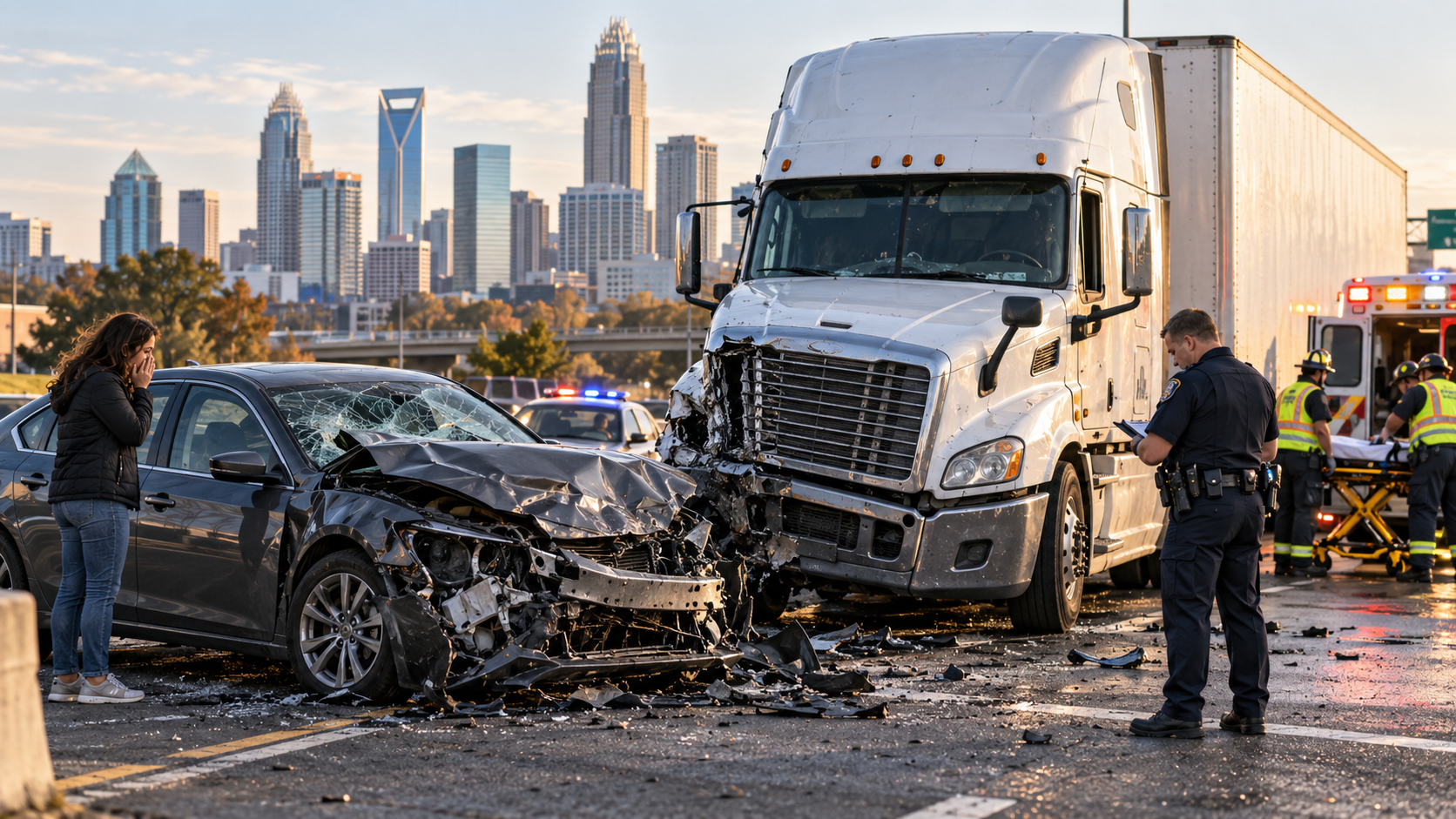
Charlotte’s position as a major logistics and distribution hub, sitting at the intersection of Interstate 77 and Interstate 85, means commercial trucking traffic flows through the region in substantial volume every day. When serious truck accidents occur, North Carolina’s legal framework for handling fault presents a genuinely unusual challenge for injured parties, one that differs sharply from the rules governing personal injury claims in most other states.
Understanding North Carolina’s Harsh Contributory Negligence Standard
North Carolina remains one of only a small handful of American jurisdictions that still follows pure contributory negligence, a legal doctrine under which an injured party who is found even one percent at fault for an accident can be completely barred from recovering any damages, regardless of how significantly the other party’s negligence contributed to the incident. This stands in stark contrast to the comparative negligence systems used in the overwhelming majority of states, which allow injured parties to recover damages reduced by their percentage of fault, even when that fault is substantial.
This doctrine has significant practical implications for truck accident litigation specifically, since these cases frequently involve complex factual scenarios where multiple parties, including the truck driver, the trucking company, other motorists, and sometimes even road maintenance authorities, may have contributed to an accident in varying degrees. Defense attorneys representing trucking companies and their insurers are well aware of North Carolina’s contributory negligence standard and routinely investigate even minor potential fault on the part of the injured party, since establishing any contributory negligence at all can completely defeat an otherwise strong claim.
The Last Clear Chance Doctrine as a Potential Exception
North Carolina law does provide one significant exception to the harsh contributory negligence bar, known as the last clear chance doctrine. Under this doctrine, an injured party may still recover damages, despite their own negligence, if the defendant had the last clear opportunity to avoid the accident and failed to take reasonable action to do so.
In truck accident cases specifically, this doctrine can become particularly relevant given the physical dynamics involved in commercial vehicle collisions. A commercial truck’s substantially longer stopping distance, larger blind spots, and the additional time truck drivers may have to observe and react to a developing hazardous situation can, in certain factual scenarios, support an argument that a truck driver had the last clear chance to avoid a collision even if the other driver was also negligent to some degree.
According to the Federal Motor Carrier Safety Administration, commercial trucks require substantially greater stopping distances than passenger vehicles, particularly at highway speeds, a physical reality that becomes directly relevant to last clear chance arguments in litigation involving commercial vehicle collisions on Charlotte’s interstate corridors.
Why Thorough Evidence Development Matters More in North Carolina
Given the severe consequences that even minor contributory fault can produce under North Carolina law, thorough evidence development becomes considerably more important in Charlotte truck accident cases than it might be in a state with a more forgiving comparative negligence standard. Establishing a clean factual record that clearly demonstrates the trucking company’s or driver’s negligence, while proactively addressing any potential arguments regarding the injured party’s own conduct, requires meticulous investigation from the earliest stages of a case.
This often involves securing electronic logging device data documenting a truck driver’s hours of service and potential fatigue, obtaining maintenance records that may reveal equipment failures contributing to the accident, and analyzing any available dashcam or surveillance footage that can establish precisely how a collision unfolded, since ambiguous or incomplete evidence creates exactly the kind of uncertainty that defense counsel can exploit to raise contributory negligence arguments.
The Charlotte truck accident lawyer team at Shane Smith Law has built a practice specifically attuned to North Carolina’s contributory negligence challenges, working to develop the kind of comprehensive evidentiary record that these cases require. A firm representative described the strategic reality this creates: “In a comparative negligence state, a client’s minor mistake reduces their recovery. Here in North Carolina, that same minor mistake can eliminate it entirely if the defense successfully argues it. That reality shapes literally every aspect of how we investigate and build these cases from day one.”
Federal Trucking Regulations and Their Role in Liability
Beyond the contributory negligence considerations, Charlotte truck accident cases typically involve federal regulatory frameworks that do not apply to standard passenger vehicle collisions. Federal Motor Carrier Safety Administration regulations govern hours of service, vehicle maintenance standards, and driver qualification requirements, and violations of these federal regulations can serve as powerful evidence of negligence that helps establish a trucking company’s liability while simultaneously supporting arguments against any contributory negligence theory the defense might raise.
Commercial trucking companies also typically carry substantially higher insurance policy limits than passenger vehicle drivers, reflecting the catastrophic injury potential inherent in commercial vehicle collisions, which means the stakes involved in properly navigating North Carolina’s contributory negligence rules are often considerably higher in truck accident cases than in standard car accident litigation.
Protecting a Charlotte Truck Accident Claim
Given North Carolina’s uniquely unforgiving contributory negligence standard, injured parties in Charlotte truck accidents benefit enormously from prompt, thorough legal representation capable of building a comprehensive factual record from the earliest possible stage. Photographing the accident scene, identifying and securing witness contact information, and preserving any available electronic or video evidence before it becomes unavailable are all critical steps that take on heightened importance given how completely a successful contributory negligence defense can undermine an otherwise valid claim.
For Charlotte residents navigating the aftermath of a serious truck accident, understanding both the substantial risks that North Carolina’s contributory negligence doctrine presents and the strategies available to address them provides an essential foundation for protecting a claim’s full value in one of the country’s most challenging legal environments for injured accident victims.
