

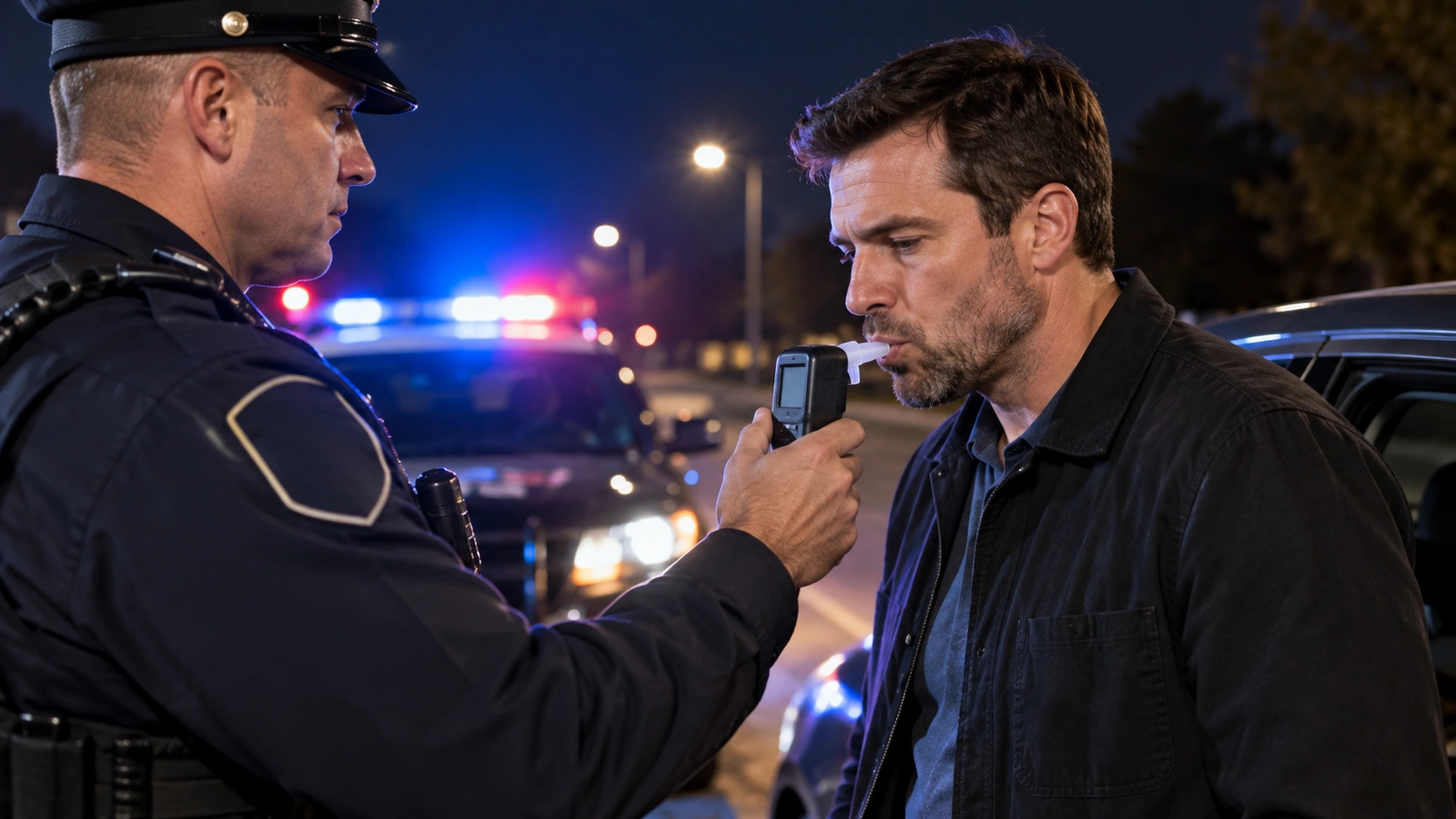
You may have walked away from a stop thinking the breath test would settle everything, then found yourself charged anyway. That is the part that catches people off guard. You did not blow over the limit, or maybe you never took the test at all, and now you are staring at court dates, license trouble, insurance costs, and the fear that one bad night could follow you for years. In situations like these, first-time DUI defense can make a meaningful difference.
The short answer is yes. You can be convicted of DUI without failing a breath test. A prosecutor does not always need a high breath result to prove impairment. In many cases, the state builds its case from the officer’s observations, driving behavior, field sobriety tests, body camera footage, statements you made, and chemical tests other than breath. That is why a DUI charge without a failed breathalyzer still needs a serious defense.
A DUI conviction can happen without a failed breath test
Most people think DUI cases rise or fall on a number. If the number is under the legal limit, the case should disappear. That is not how many states handle impaired driving. There are usually two paths the state can use. One is the per se route, where a chemical test shows a blood alcohol concentration at or above the legal limit. The other is impairment, where the state claims your ability to drive was affected by alcohol, drugs, or a mix of both.
That means a person can be charged and convicted even with no failed breath test at all. An officer may say you were weaving, braking late, missing signals, speaking with slurred words, fumbling for documents, or smelling strongly of alcohol. If you admitted drinking, looked unsteady, or performed poorly on field sobriety tests, those facts may be used to argue you were impaired even without a breath reading over the limit.
This gets harder when the stop involved prescription medication, cannabis, or a combination of substances. A breath machine does not measure many drugs, but the state can still pursue a case based on conduct and other evidence. The CDC’s overview of impaired driving reflects that impaired driving is not limited to alcohol alone.
Refusing a breath test creates a different legal problem
Some drivers refuse testing because they think no number means no case. That choice often triggers separate penalties. Under implied consent laws, driving on public roads usually means you already agreed to chemical testing under certain conditions. Refusal can lead to license suspension, and in some cases the refusal itself may be used as evidence. Federal law also addresses implied consent in some settings, as shown in 18 U.S.C. § 3118.
State laws differ, but the pattern is consistent. Refusal does not end the case. It often opens a second front. You may be fighting the criminal charge and the license consequences at the same time. The NHTSA discussion of implied consent and licensing laws shows how common these penalties are across the country.
You can see how this happens in real life. A driver blows under 0.08 but appears confused, drifts across a lane line, and struggles through field sobriety tests. Another driver refuses testing after a crash and tells the officer he had “a few drinks.” Neither scenario gives the clean ending people expect. Both can still lead to prosecution.
The evidence in a DUI case often extends beyond the breath machine
Breath devices are only one piece of evidence, and they are not perfect. They can be challenged for calibration issues, operator error, medical conditions, mouth alcohol contamination, and timing problems. A low result can also help the defense. Still, the state may try to fill the gap with everything else in the report.
That is why can you be convicted of drunk driving without a breath test is such a common concern. The answer stays the same because prosecutors often present a stack of smaller facts and ask the judge or jury to treat them as proof of impairment. Sometimes those facts are weak. Sometimes they contradict each other. Sometimes the body camera tells a different story than the written report. Those details matter.
Key differences between common DUI evidence and the risks they create
| Evidence Type | What the State Tries to Prove | Common Defense Issues |
|---|---|---|
| Breath test | Blood alcohol concentration at or above the legal limit | Machine calibration, test timing, medical conditions, operator mistakes |
| Field sobriety tests | Physical signs of impairment | Poor lighting, road conditions, injuries, anxiety, unclear instructions |
| Officer observations | Behavior consistent with intoxication | Subjective judgment, incomplete notes, body camera conflicts |
| Blood test | Alcohol or drugs in the system | Chain of custody, lab handling, delay between driving and testing |
| Refusal evidence | Consciousness of guilt or implied consent violation | Improper warning, unlawful stop, confusion about rights or procedure |
If you are searching DUI conviction without breathalyzer, what you likely need is not a generic explanation. You need to know whether the stop was lawful, whether the officer had enough cause, whether the testing process followed the rules, and whether the evidence actually shows impairment at the time you were driving.
Three steps to take right away after a DUI charge
Get the timeline down in writing. Write out what happened from the first drink or medication dose to the traffic stop, arrest, and testing. Include times, food, sleep, health issues, and what you told the officer. Small details fade fast, and those details can matter in a criminal defense lawyer review.
Protect the evidence before it disappears. Save paperwork, bond documents, towing records, receipts, prescription information, and any messages that show where you were and when. If there were passengers or witnesses, get their names and contact information. Surveillance footage from bars, stores, and parking lots may not last long.
Get legal advice before making the case harder. Do not explain yourself on social media. Do not call the officer. Do not assume a low breath result means you can handle it alone. A lawyer can look at the stop, the testing, the video, and the license issues together and spot weaknesses that are easy to miss when you are stressed.
A strong defense starts with the facts, not assumptions
A DUI charge can feel like the outcome is already set, especially if the officer sounded certain or the paperwork makes everything look final. It is not final. You can be charged without failing a breath test, and you can also challenge the case without guessing. The right response is to look closely at the evidence, the procedure, and the gaps.
If you are dealing with a DUI arrest and need clear guidance, speak with a criminal defense lawyer as soon as possible. Quick action gives you a better chance to protect your license, your record, and your next steps.
Reach Out To A Criminal Defense Attorney
Knight Law
1010 W. Taylor St.
San Jose, CA 95126
