

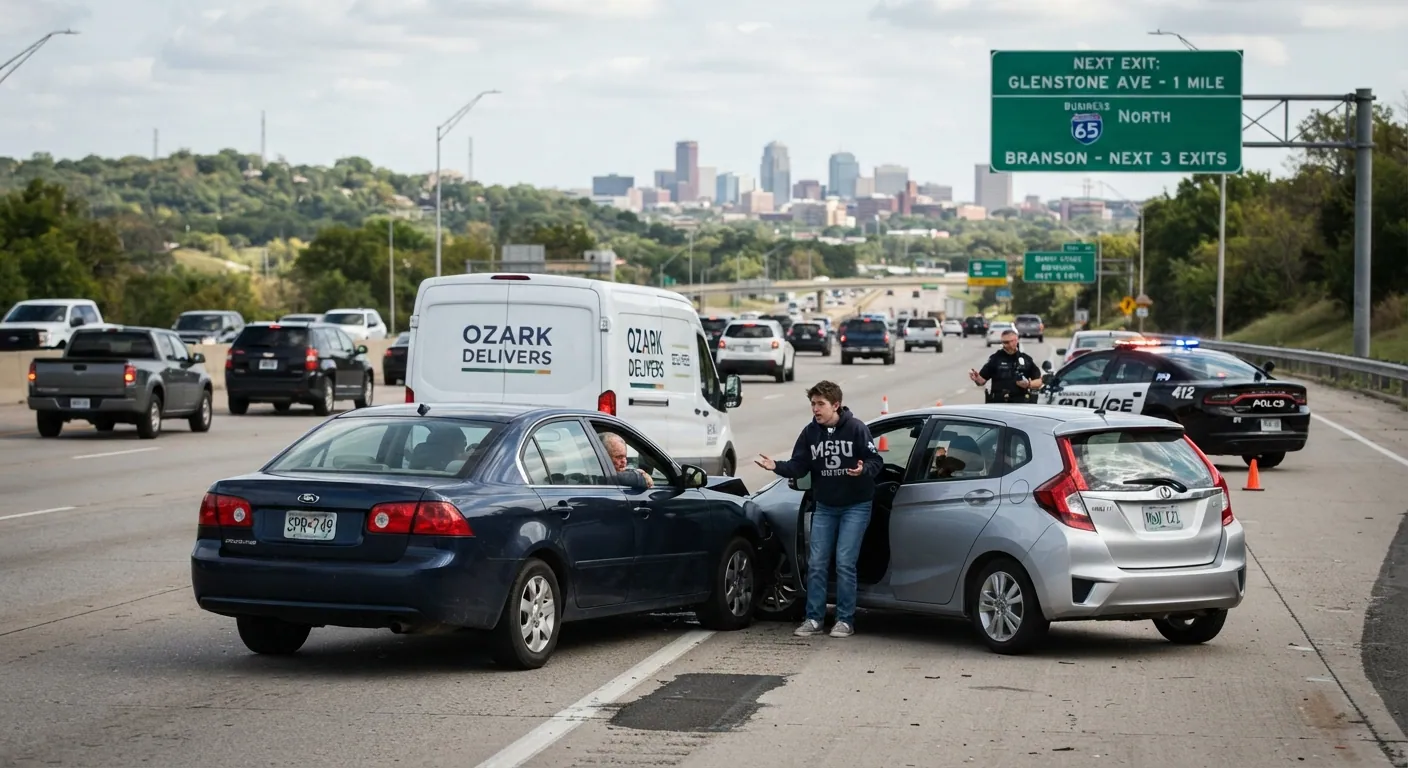
Springfield is the third largest city in Missouri, and its roads carry heavy traffic every day. Drivers share Glenstone Avenue, Kearney Street, and the busy stretches of James River Freeway with commuters, delivery vans, students from Missouri State University, and tourists heading to Branson. Crashes happen often, and when they do, one question quickly comes up: who was at fault?
In many states, being partly to blame for a crash can wipe out your right to compensation. Missouri works differently. Understanding the state’s comparative fault rule can make a real difference in how Springfield drivers approach an accident claim.
What Pure Comparative Fault Means
Missouri follows a rule known as pure comparative fault. Under this system, each person involved in a crash is assigned a percentage of responsibility, and any compensation is reduced by the injured person’s share of fault. The concept is explained in more detail on Wikipedia’s page on comparative negligence, which compares the different systems used across the United States.
Here is a simple example. Imagine a driver is hit by another car that ran a red light at Battlefield Road. The injured driver’s total damages, including medical bills, lost wages, and pain and suffering, come to $50,000. If a jury finds the injured driver was 10 percent at fault for checking a phone just before the crash, the award drops by 10 percent, to $45,000.
The key word is pure. In Missouri, a person can recover something even if they were mostly at fault. A driver found 70 percent responsible could still recover 30 percent of their damages. That is very different from states that use a modified system, where anyone found 50 or 51 percent at fault recovers nothing at all.
How Fault Is Decided After a Springfield Crash
Fault is rarely as simple as one driver being entirely right and another entirely wrong. Insurance adjusters, and sometimes juries, look at a range of evidence to decide how blame should be shared. That evidence often includes:
- The police report from the Springfield Police Department or the Missouri State Highway Patrol
- Photos of vehicle damage and the crash scene
- Statements from witnesses
- Traffic camera or dashcam footage
- Phone records, if distraction may have played a role
- Expert analysis of speed and impact
Road conditions can also matter. Springfield sees ice storms in winter and heavy rain in spring, and drivers are expected to adjust their speed to conditions. If a crash happens on a highway or state route, information from the Missouri Department of Transportation about construction zones, lane closures, or road design can sometimes become part of the picture.
Insurance companies understand that comparative fault reduces what they pay. Because of this, adjusters often look for any detail that suggests the injured driver contributed to the crash. A comment like “I didn’t see them coming” at the scene can later be framed as proof of inattention.
This is one reason many people speak with an auto injury lawyer Springfield Missouri residents trust before accepting any settlement. An experienced attorney can push back on unfair fault percentages and gather evidence that shows what really happened.
Deadlines and Insurance Rules in Missouri
Missouri is an at-fault insurance state. That means the driver who causes a crash, through their insurance company, is responsible for paying for the damage. Missouri drivers must carry minimum liability coverage of $25,000 per person and $50,000 per accident for bodily injury, along with $25,000 for property damage. The state also requires uninsured motorist coverage, which can be essential if the at-fault driver has no insurance at all.
Timing matters too. Missouri gives injured people five years from the date of a crash to file most personal injury lawsuits. That is longer than in many states, but waiting is rarely a good idea. Evidence disappears, witnesses forget details, and surveillance footage is often deleted within weeks. Wrongful death claims follow a shorter three-year deadline.
Practical Steps to Protect Your Claim
The steps you take in the hours and days after a crash can shape how fault is assigned later. Start by getting medical care right away, even for injuries that seem minor. A gap between the crash and your first doctor visit can be used to argue that your injuries came from something else.
Be careful with what you say. Apologizing is a natural reaction, but it can be treated as an admission of fault. Stick to the facts with police and insurers, and avoid guessing about speed or timing.
Document everything you can. Keep copies of medical records, repair estimates, and receipts, and write down your memory of the crash while it is fresh. If you can, photograph the scene before vehicles are moved.
Finally, think twice before giving a recorded statement to the other driver’s insurance company. You are not required to do so, and statements given without preparation are one of the most common ways that fault percentages get shifted onto the injured driver.
Missouri’s pure comparative fault system is generally good news for injured drivers, because it means partial blame does not end a claim. At the same time, every percentage point matters, and insurers know it. Springfield drivers who understand how fault is measured, act quickly to preserve evidence, and seek sound advice put themselves in the best position to recover fair compensation after a crash.
