

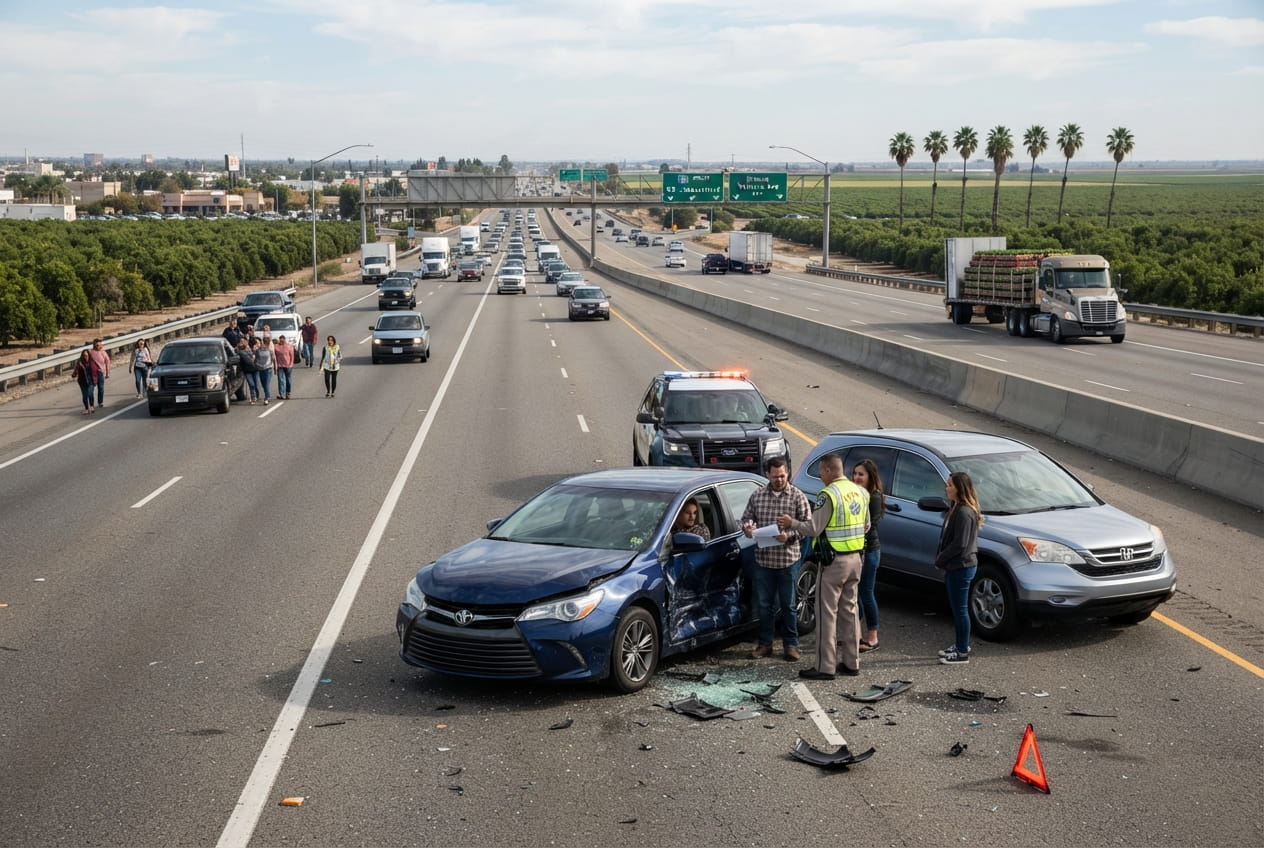
Highway 99 is the backbone of the Central Valley. It runs straight through Fresno, linking farms, packing houses, and growing neighborhoods with Bakersfield to the south and Modesto and Sacramento to the north. Every day it carries a heavy mix of commuters, farm equipment, and big rigs hauling produce to market. For many Fresno residents, it is impossible to get through the week without using it.
That busy mix also makes Highway 99 one of the more dangerous roads in California. When a crash happens, drivers and passengers are often left with injuries, damaged vehicles, and a lot of questions about what comes next. Knowing your legal rights can make that difficult time easier to manage.
Why Highway 99 Sees So Many Serious Crashes
California State Route 99 was built decades ago, and many stretches were not designed for the volume of traffic they now carry. Short on-ramps, older interchanges, and ongoing widening projects mean drivers must merge and change lanes in tight spaces. Construction zones near Fresno can shift lanes with little warning.
Large trucks are a big part of the picture. The Central Valley is one of the most productive farming regions in the world, and much of that harvest travels on Highway 99. Trucks need far more room to stop than passenger cars, and their blind spots can hide entire vehicles.
Weather plays a role as well. In late fall and winter, the valley is known for tule fog, a dense ground fog that can drop visibility to almost nothing in a matter of minutes. Some of the worst multi-vehicle pileups in California history have happened in these conditions. Summer brings its own risks, as extreme heat can cause tire blowouts and driver fatigue.
Speeding, distracted driving, and impaired driving round out the list of common causes. A driver glancing at a phone at 65 miles per hour travels the length of a football field in just a few seconds.
What to Do After a Crash in Fresno
Your first priority after a crash is safety. If you can move your vehicle out of traffic, do so, and turn on your hazard lights. Call 911 if anyone is hurt. On Highway 99, the California Highway Patrol usually responds and prepares the official collision report.
If it is safe, gather information. Exchange names, contact details, driver’s license numbers, and insurance information with the other drivers. Take photos of the vehicles, the road, any skid marks, and your injuries. Ask witnesses for their phone numbers before they leave.
See a doctor as soon as possible, even if you feel fine. Neck and back injuries, concussions, and internal injuries often take hours or days to show symptoms. A prompt medical visit protects your health and creates a clear record linking your injuries to the crash.
California also requires drivers to file an SR-1 report with the DMV within 10 days if anyone was injured or killed or if property damage was more than $1,000. This is separate from the police report, and failing to file it can lead to a license suspension.
Many people find it helpful to speak with local counsel early. The Fresno car accident attorneys at Fowler Helsel Vogt are familiar with the roads, courts, and insurance practices in the Central Valley, which can make a real difference when a claim involves several drivers or a commercial truck.
How California Law Treats Fault and Compensation
California is an at-fault state. The driver who caused the crash, usually through their insurance company, is responsible for the damages. Those damages can include medical bills, future treatment, lost wages, reduced earning ability, vehicle repairs, and pain and suffering.
The state follows a pure comparative negligence rule. If you are found partly responsible for a crash, your compensation is reduced by your share of fault, but you can still recover. For example, if your damages total $80,000 and you are found 25 percent at fault, you could recover $60,000.
Insurance companies know this rule well and often try to shift more blame onto the injured driver. An adjuster may suggest you were driving too fast for the fog or that you changed lanes without enough space. Be careful when speaking with any insurer, and avoid giving a recorded statement to the other driver’s company before you understand your rights.
Coverage limits are another concern. California’s minimum liability limits are low compared with the cost of a serious injury. If the at-fault driver has little or no insurance, your own uninsured or underinsured motorist coverage may be an important source of recovery.
Deadlines and Common Mistakes to Avoid
Time limits apply to every injury claim. In California, you generally have two years from the date of the crash to file a personal injury lawsuit. If the crash involved a government vehicle or a dangerous road condition on public property, you may need to file a formal claim within six months. Missing either deadline can prevent you from recovering anything.
Several common mistakes can weaken a strong claim:
- Waiting too long to get medical treatment
- Accepting the first settlement offer before your injuries are fully understood
- Posting photos or comments about the crash on social media
- Throwing away damaged items, such as a broken car seat or phone
- Failing to keep copies of bills, receipts, and missed work records
Keeping organized records from the start is one of the simplest ways to protect yourself. A folder with every bill, report, and photo will save time and stress later.
Highway 99 will always be essential to life in Fresno, and crashes on it can change lives in an instant. By acting quickly, documenting what happened, and understanding how California law works, injured drivers and their families can protect their rights and focus on recovery.
