

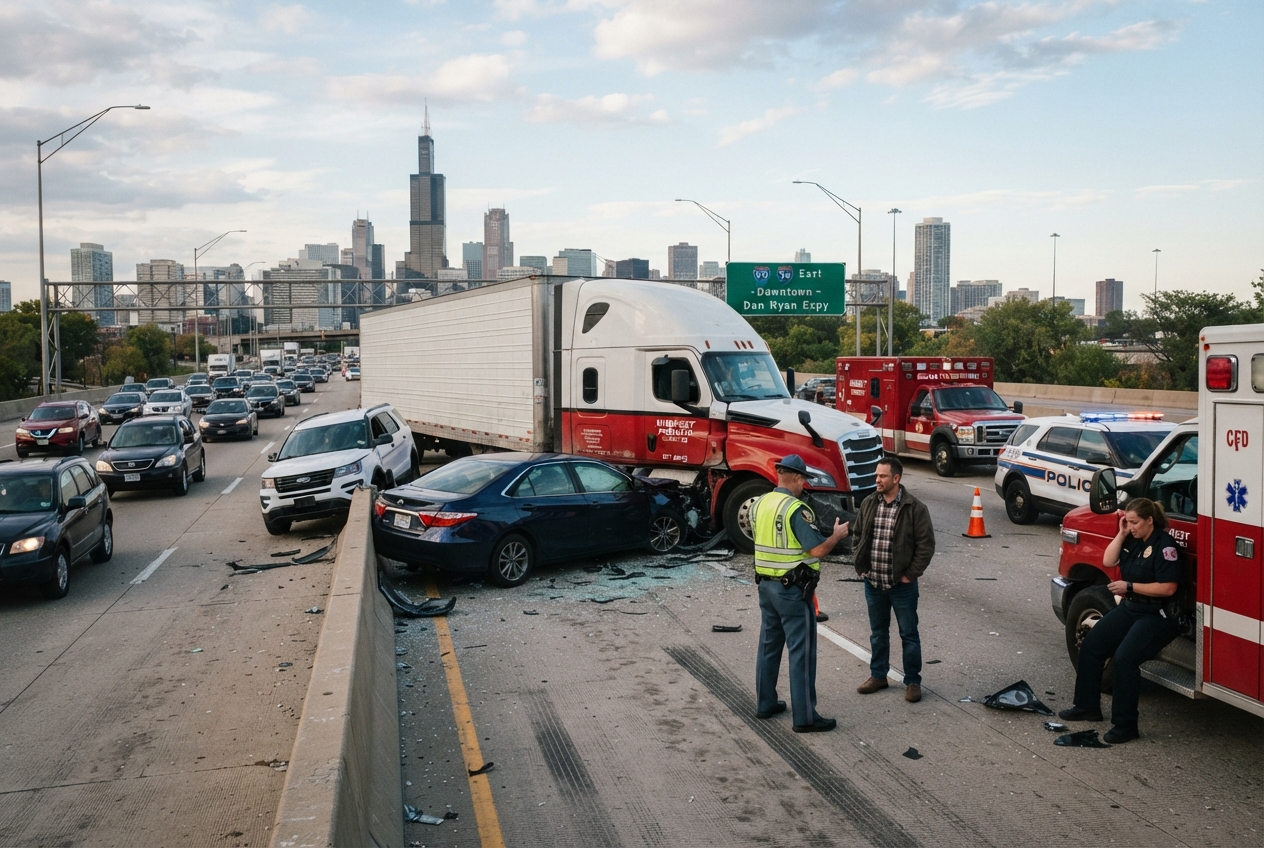
Chicago sits at the center of the nation’s freight network. Interstates 90, 94, 55, and 290 carry a steady stream of semi-trucks through the city, moving goods to and from rail yards, warehouses, and distribution centers across the Midwest. The Dan Ryan, the Kennedy, the Eisenhower, and the Stevenson are among the busiest roads in the region, and they are often packed with commuters driving alongside 80,000-pound tractor-trailers.
When a passenger car and a large truck collide, the results are often devastating. Figuring out who is legally responsible is also much more complicated than in a typical car crash. Several parties may share the blame, and each one usually has its own insurer and legal team.
Why Truck Crashes on Chicago Expressways Are Different
The sheer size of commercial trucks makes them dangerous. A loaded semi needs far more distance to stop than a passenger vehicle, and its blind spots are large enough to hide an entire car. On crowded expressways like the Dan Ryan Expressway, which is one of the busiest stretches of highway in the country, sudden slowdowns and frequent lane changes create constant risk.
Chicago weather adds to the danger. Snow, ice, and strong winds off Lake Michigan can make large trucks harder to control, especially when they are empty or lightly loaded. Construction zones, tight interchanges, and the merges near the Circle Interchange require careful driving from everyone, and a truck driver who is tired, rushed, or distracted has very little room for error.
Who Can Be Held Responsible
In a typical car crash, the driver at fault and their insurer are the main targets of a claim. Truck accidents are different because many companies are involved in getting a load from one place to another. Depending on the facts, liability may extend to several parties.
The truck driver is the obvious starting point. Drivers can be responsible for speeding, distracted driving, following too closely, unsafe lane changes, or driving while impaired.
The trucking company is often the most important defendant. Under a legal principle called respondeat superior, employers can be held responsible for the actions of employees on the job. Trucking companies can also be directly liable for hiring unqualified drivers, failing to train them, or pushing schedules that encourage drivers to break safety rules.
Other parties may share responsibility too. A shipper or loading company may have overloaded a trailer or failed to secure cargo properly. A maintenance contractor may have neglected brakes or tires. The manufacturer of a defective part could also be liable if a mechanical failure caused or worsened the crash.
Sorting out these relationships takes time and resources. This is why many crash victims turn to firms like Charlie Therman Chicago truck accident injury lawyers, who focus on gathering evidence quickly from every party that may share the blame. Trucking companies often send their own investigators to a crash scene within hours, and injured people benefit from having someone working just as fast on their behalf.
Federal Safety Rules and the Evidence They Create
Commercial trucks are governed by a detailed set of federal regulations, overseen by the Federal Motor Carrier Safety Administration. These rules can be powerful evidence in a claim.
Hours of service limits are a good example. Property-carrying drivers can generally drive no more than 11 hours after 10 consecutive hours off duty, and they cannot drive beyond the 14th hour after coming on duty. Most trucks now use electronic logging devices that record driving time automatically. If those records show a driver was over the limit, they can support a claim that fatigue played a role.
Other important evidence can include:
- The truck’s electronic control module, sometimes called a black box, which may record speed and braking
- Maintenance and inspection records
- The driver’s qualification file, drug and alcohol testing results, and training history
- Dispatch communications and delivery schedules
- Cargo loading records and weight tickets
Much of this information is controlled by the trucking company, and some of it may only be kept for a limited time. A prompt letter asking the company to preserve evidence can prevent important records from being lost.
Illinois Rules That Affect Your Claim
Illinois uses a modified comparative fault system. An injured person can recover compensation as long as they are not more than 50 percent responsible for the crash, but any award is reduced by their share of fault. If you are found 51 percent or more at fault, you cannot recover damages from the other parties.
Deadlines are also strict. Most personal injury claims in Illinois must be filed within two years of the crash. Claims against certain public entities, such as a city agency, may have shorter deadlines and special notice requirements.
Settlements in truck cases are often larger than in car crashes because injuries tend to be more serious and commercial insurance policies carry higher limits. That also means insurers fight harder. Accepting a quick offer before you understand the full cost of your injuries, including future medical care and lost earning ability, can leave you without enough to recover.
If you are involved in a crash with a truck on a Chicago expressway, get medical help first, then call the police so an official report is created. Take photos of the scene, the truck, and the company name and USDOT number on the cab if you can do so safely. Collect witness names and avoid discussing fault with the driver or anyone from the trucking company.
Truck crash claims are complex, but understanding who may be liable and what evidence matters can help victims and their families pursue the full compensation they deserve.
