

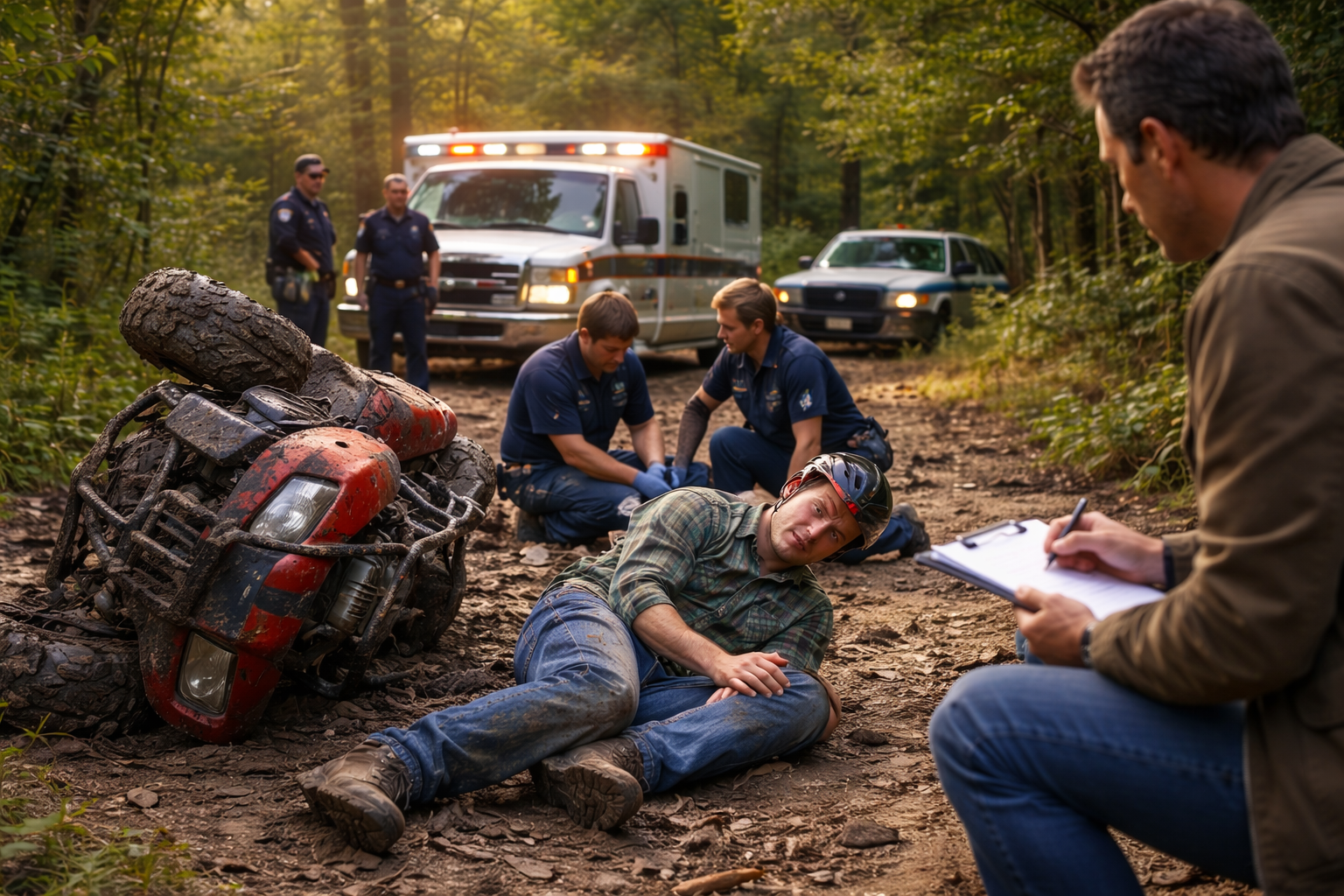
You ride an ATV for escape, work, or family time. Then a crash rips through that sense of control. In Wisconsin, the chaos after an ATV wreck can feel worse than the impact. Medical bills hit fast. Insurance companies shift blame. People who once felt close may argue about fault. You need clear answers about who is responsible. You also need to know what steps protect your rights. Wisconsin law treats ATV crashes differently than car wrecks. Property owners, rental companies, drivers, and even parents may face blame. Each has different duties. Each may try to avoid them. An ATV accident attorney can help sort out this mess. This blog explains who may be liable, how fault works, and what you can do right now to protect yourself and your family.
How Wisconsin Views ATVs and Safety Rules
In Wisconsin, ATVs and UTVs follow their own rules. These rules sit in state law and local rules. You can read many of them in the Wisconsin Department of Natural Resources guide at https://dnr.wisconsin.gov/topic/ATV. You are expected to know these rules before you ride.
Key safety rules include three simple points.
- Age and safety education for young riders
- Helmet and gear rules for some riders
- Speed limits, trail signs, and no drinking and riding
When someone breaks these rules and a crash follows, that broken rule can point to fault. It can also affect insurance claims and lawsuits.
Who Can Be Liable After an ATV Crash
Liability means legal responsibility for harm. After an ATV crash in Wisconsin, more than one person or group can share that weight. The law allows shared fault. That means a court or insurance company can split blame by percent.
Here are the most common people who may face blame.
- You as the ATV driver
- Another ATV driver or passenger
- The owner of the ATV
- The landowner where you rode
- A rental company or tour operator
- A manufacturer or repair shop
- Parents or guardians of young riders
Each one has different duties under Wisconsin law. Your claim depends on who broke which duty and how that choice led to your injury.
Common Crash Situations and Who May Be at Fault
ATV crashes often follow patterns. You may see yourself in one of these scenes.
- You hit a hidden hole on private land
- Another rider hits you from behind on a trail
- A child flips a borrowed ATV with no helmet
- A rental ATV has failing brakes on a steep hill
- A drunk rider crosses into your path on a frozen lake
Each scene raises different liability questions. The table below gives a simple comparison.
Sample Wisconsin ATV Crash Scenarios and Possible Liability
| Scenario | Who May Be Liable | Key Questions |
|---|---|---|
| Crash on private land with hidden hazard | Landowner, ATV owner, rider | Did the owner know about the hazard. Was there a warning. Did you ride off the marked path. |
| Collision with another ATV on public trail | Other rider, you, trail sponsor in rare cases | Who broke trail rules. Was speed unsafe. Were signs clear. |
| Child hurt on ATV owned by a neighbor | Neighbor, parents, child in some cases | Was the child trained. Was size of ATV right. Did any adult watch the ride. |
| Rental ATV with failing brakes | Rental company, manufacturer, rider | Was the ATV inspected. Did the company fix known issues. Did the rider misuse it. |
| Drunk rider causes a crash | Drunk rider, ATV owner, bar or host in rare cases | Was alcohol a factor. Who supplied the ATV. Did anyone try to stop the ride. |
How Wisconsin Shared Fault Rules Work
Wisconsin uses a shared fault rule for many injury cases. You can still recover money even if you share some fault. There is one hard limit. If you are more at fault than the other side, you may receive nothing.
For example, if you are 30 percent at fault and the other rider is 70 percent at fault, your payment can drop by 30 percent. If your loss is 100,000 dollars, you may collect 70,000 dollars. If you are 60 percent at fault, you may recover nothing.
This rule makes details matter. Small facts about speed, helmets, and trail use can change the outcome. You can read more on Wisconsin injury law through the University of Wisconsin Law Library at https://law.wisc.edu/library/. That source links to state statutes and court rules.
What Property Owners Need to Know
Many ATV crashes happen on private land. Owners often think a simple warning sign is enough. That belief can be wrong.
Owners should think about three key duties.
- Fix known hazards or block off dangerous spots
- Warn riders about risks that are not obvious
- Control who rides, where, and when
Recreational use laws can protect some owners who open land to the public without a fee. Yet those laws have limits. If an owner charges money or behaves with clear disregard for safety, protection may vanish.
What Parents and Young Riders Should Know
Children face higher risk on ATVs. Their bodies and judgment are still growing. Wisconsin has age and training rules for young riders. Breaking these rules can expose parents to claims and can also hurt a child’s chance to recover money.
Parents should focus on three steps.
- Follow age limits and safety course rules
- Match the size of the ATV to the child
- Use helmets and safety gear every ride
When a crash happens, these steps can protect health and legal rights.
Steps to Take Right After an ATV Crash
Your actions in the first hours shape your claim. Fear and shock can cloud your thoughts. Use this simple list.
- Get medical care right away, even if pain feels minor
- Call law enforcement if there is injury or property damage
- Report the crash as required by Wisconsin ATV rules
- Take photos of the scene, machines, and injuries
- Collect names and contacts of riders and witnesses
- Do not argue about fault at the scene
- Do not sign any forms from insurance before you understand them
Then contact a trusted legal guide who understands Wisconsin ATV law. That step can prevent costly mistakes.
How Insurance Fits Into ATV Liability
ATV insurance can be confusing. Some policies cover only certain riders or locations. Some exclude racing or drinking. Homeowners insurance may or may not cover ATV use. It often depends on where you rode and how you used the machine.
Insurance companies often try to lower payouts. They may claim you knew the risk. They may say a child assumed the danger. They may point to a waiver you signed. Wisconsin law does not always honor those defenses. A waiver does not give someone a free pass to behave without care.
Protecting Your Family After an ATV Crash
An ATV crash can pull your family into fear, blame, and money stress. You can regain control with three focused moves.
- Get full medical checks for every rider
- Gather and store all records, photos, and bills
- Learn your rights before you talk at length with any insurance adjuster
You deserve clear answers and honest support. Wisconsin law gives you rights after an ATV crash. With the right steps, you can hold the right people accountable and help your family move toward steady ground.
