

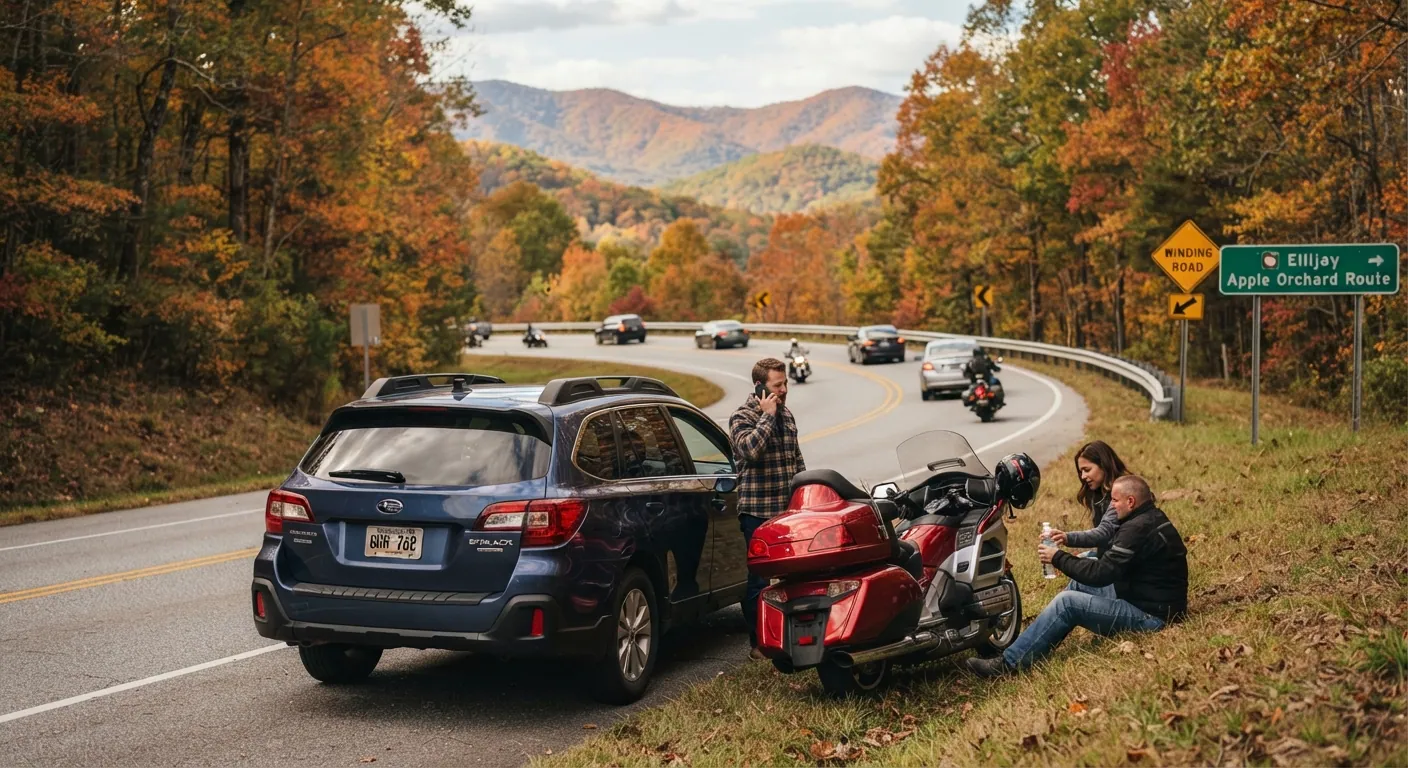
North Georgia’s mountains draw visitors all year. In the fall, traffic fills the roads around Ellijay as families head to apple orchards and the Georgia Apple Festival. In spring and summer, motorcyclists, cyclists, and campers make their way to the lakes, rivers, and trails of the Chattahoochee National Forest. Locals in Gilmer, Fannin, and Pickens counties know these roads well, but many visitors do not.
Mountain roads are beautiful, but they can also be unforgiving. Sharp curves, steep grades, and changing weather leave little room for error. When a crash happens, injured drivers, riders, and passengers often have questions about their rights and what to do next.
Why Mountain Roads Are So Challenging
The terrain itself is the biggest factor. Two-lane highways like Georgia 52 and Georgia 515, also known as the Zell Miller Mountain Parkway, wind through hills and valleys with tight curves and limited sight distance. A driver going a little too fast into a blind curve may cross the center line before they can react.
Ellijay, Georgia, known as the Apple Capital of Georgia, sees heavy seasonal traffic. Visitors may slow suddenly to look for an orchard entrance or pull off onto a narrow shoulder to take photos. Farm vehicles and logging trucks also use these roads, and passing them safely can be difficult.
Weather adds to the danger. Fog often settles in the valleys in the morning. Rain can make leaf-covered pavement slick in the fall, and winter can bring ice to shaded curves and bridges even when the rest of the road is dry. Wildlife, especially deer, can appear without warning, particularly at dawn and dusk.
Common Types of Mountain Crashes
Crashes on mountain roads tend to follow certain patterns. Some of the most common include:
- Head-on collisions caused by drivers drifting over the center line on curves
- Single-vehicle crashes where a driver leaves the road on a sharp turn
- Motorcycle crashes involving gravel, wet leaves, or other drivers failing to see a rider
- Rear-end crashes when a driver brakes suddenly on a hill or curve
- Truck crashes caused by overheated brakes on long downhill grades
- Collisions with deer and other wildlife
Motorcyclists face special risks. North Georgia’s winding roads are popular with riders, but a car that drifts into the wrong lane or a patch of loose gravel can lead to serious injuries. Because riders have little protection, even a low-speed crash can result in broken bones, head injuries, or worse.
When crashes happen, local knowledge can matter. Teague Law is based in East Ellijay and works with people hurt on the same mountain roads described here, which can help when investigating how a crash on a particular curve or stretch of highway really happened.
Georgia Law After a Mountain Road Crash
Georgia is an at-fault state. The driver who causes a crash, usually through their insurance company, is responsible for paying for the damage. Georgia drivers must carry minimum liability coverage of $25,000 per person and $50,000 per accident for bodily injury, plus $25,000 for property damage. Serious crashes often exceed these limits, which makes uninsured and underinsured motorist coverage especially valuable.
Georgia follows a modified comparative negligence rule. If an injured person is partly responsible for a crash, their compensation is reduced by their percentage of fault. If they are found 50 percent or more at fault, they cannot recover anything. Insurance companies frequently argue that a driver was going too fast for the curves or that a motorcyclist was riding unsafely, so careful documentation is important.
In some cases, road conditions themselves may play a role. Missing guardrails, poor signage, or damaged pavement could contribute to a crash. Information about state highway projects and road conditions is available from the Georgia Department of Transportation. Claims against government agencies follow special notice rules and shorter deadlines, so they require prompt attention.
For most injury claims, Georgia allows two years from the date of the crash to file a lawsuit. Property damage claims generally have a four-year deadline. Waiting too long can mean losing the right to recover entirely.
Steps to Protect Yourself
If you are involved in a crash on a mountain road, safety comes first. Turn on your hazard lights and, if possible, move out of the travel lane, keeping in mind that curves can hide your vehicle from approaching traffic. Call 911 right away. Cell service can be spotty in parts of North Georgia, so note your location using mile markers, road names, or nearby landmarks.
Once it is safe, take photos of the vehicles, the curve or hill where the crash occurred, skid marks, and road conditions. Get contact and insurance details from other drivers and the names of any witnesses. Seek medical care promptly, even if you feel fine, as some injuries do not show symptoms immediately.
Avoid giving a recorded statement to another driver’s insurer before you understand your rights, and keep all bills, receipts, and records related to the crash.
North Georgia’s mountain roads are part of what makes the region special. By driving carefully, staying alert to changing conditions, and knowing your legal options after a crash, residents and visitors alike can enjoy the mountains while protecting themselves and their families.
