

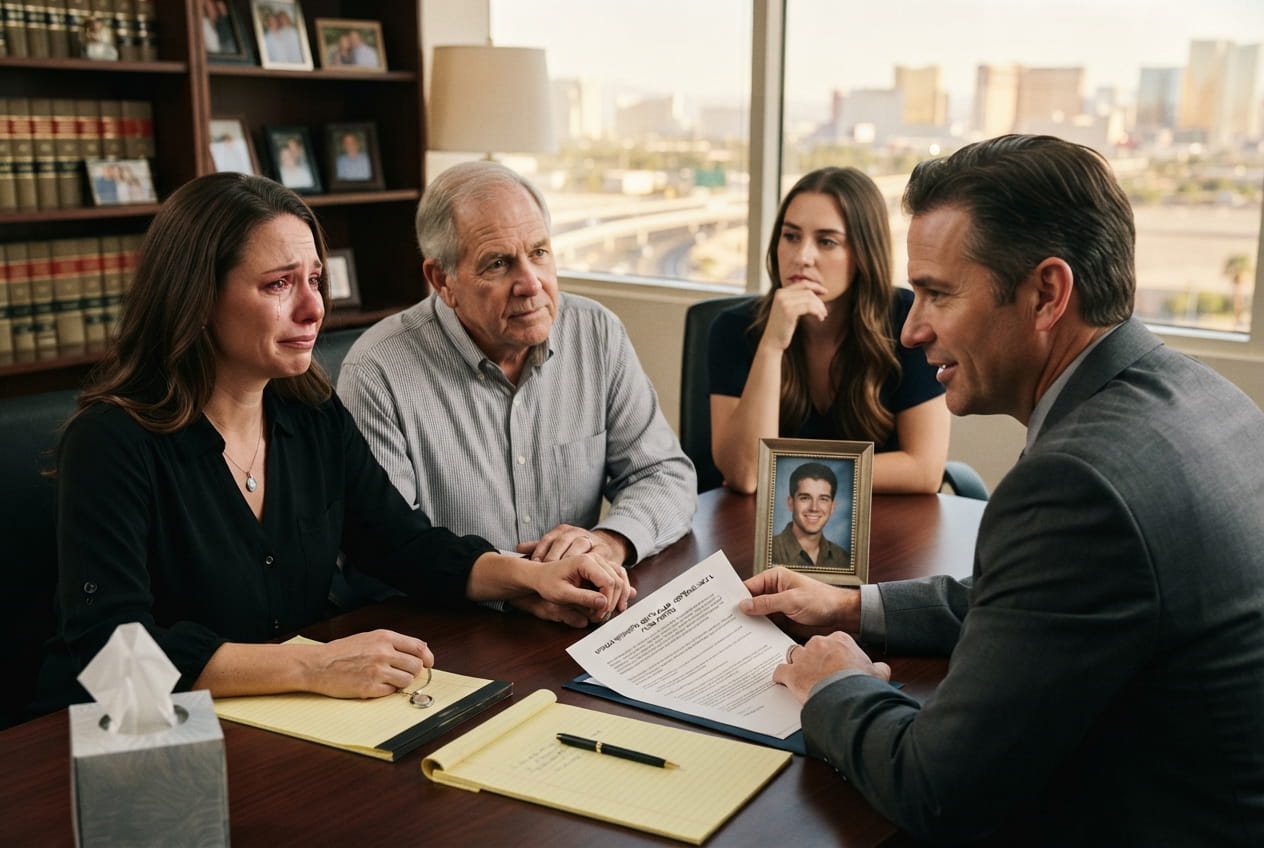
Losing a loved one suddenly is one of the hardest things a family can go through. In Las Vegas, these tragedies can happen in many ways, from crashes on Interstate 15 and the Las Vegas Strip to accidents at construction sites, hotel pools, or medical facilities. When a death is caused by someone else’s carelessness or wrongful conduct, Nevada law gives families a way to seek accountability and financial support.
A wrongful death claim cannot undo a loss, but it can help families cover expenses, replace lost income, and recognize the harm they have suffered. Understanding who can file, what can be recovered, and how long families have to act is an important first step.
What Counts as Wrongful Death in Nevada
A wrongful death occurs when a person dies because of the wrongful act or neglect of another person or business. In general terms, the claim exists when the person who died could have brought a personal injury lawsuit if they had survived. Wikipedia’s page on wrongful death claims offers a useful overview of how these cases developed and how they work across the United States.
In the Las Vegas area, common causes of wrongful death cases include:
- Car, truck, and motorcycle crashes
- Pedestrian accidents, especially in busy tourist areas
- Medical malpractice
- Unsafe conditions at hotels, casinos, and other properties
- Workplace accidents involving third parties
- Defective products
A wrongful death claim is a civil case, which is separate from any criminal charges. Even if the person responsible is never charged with a crime, or is found not guilty, the family may still pursue a civil claim. The standard of proof is lower in civil cases, which is why a family can sometimes succeed in court even when a criminal case does not move forward.
Who Can File a Wrongful Death Claim
Nevada’s wrongful death statute is found in Nevada Revised Statutes Chapter 41, specifically NRS 41.085. Under this law, a claim may be brought by the heirs of the person who died or by the personal representative of the estate.
Heirs are generally the people who would inherit from the person who died under Nevada law. That usually includes a surviving spouse or domestic partner and children. If there is no spouse or child, parents or other relatives may qualify, depending on the family situation.
The personal representative, sometimes called the executor or administrator, is the person who manages the estate. This role is often filled by a spouse, adult child, or another person named in a will or appointed by the court.
The distinction matters because the two types of claims recover different damages. Heirs can seek compensation for their own losses, including:
- Grief and sorrow
- Loss of companionship, comfort, and society
- Loss of financial support the person would have provided
- Pain and suffering of the person who died
The personal representative can seek damages on behalf of the estate, such as medical expenses before death, funeral and burial costs, and in some cases punitive damages if the conduct was especially reckless or malicious.
Because both kinds of claims can arise from the same death, families often benefit from having them handled together. An experienced H&P Law wrongful death attorney Las Vegas families turn to can help sort out who should file, what damages apply, and how to present the strongest possible case.
Deadlines Families Need to Know
In Nevada, most wrongful death lawsuits must be filed within two years of the date of death. This deadline is called the statute of limitations, and courts enforce it strictly. If a claim is filed too late, a family may lose the right to recover anything, no matter how strong the case would have been.
Some situations follow different rules. Medical malpractice cases have their own timing requirements, which can depend on when the family discovered or should have discovered the injury. Claims against government agencies may involve additional steps. Because these rules are technical, it is wise to get advice well before the deadline approaches.
Acting early also protects evidence. Surveillance footage from casinos, businesses, and traffic cameras is often recorded over within days or weeks. Witnesses move away or forget details. Vehicles are repaired or scrapped. The sooner an investigation begins, the better the chance of preserving what is needed to prove the case.
How Fault and Damages Are Decided
Nevada follows a modified comparative negligence rule. If the person who died was partly responsible for the incident, the damages can be reduced by their share of fault. If they were found more than 50 percent responsible, the family cannot recover damages.
Insurance companies often use this rule to argue that the victim contributed to their own death. A pedestrian may be accused of crossing outside a crosswalk, or a motorcyclist may be blamed for speeding. Careful investigation, including accident reconstruction and witness interviews, can help counter these arguments.
Calculating damages also takes care. Lost financial support depends on the person’s age, health, earnings, and expected career path. Emotional losses are harder to measure but are just as real. Families should be wary of early settlement offers, which may not reflect the full value of what they have lost.
No legal case can bring back a loved one. Still, holding the responsible party accountable can provide a sense of justice and help a family regain financial stability. For families in Las Vegas, understanding who can file, what damages are available, and the two-year deadline is essential. Taking time to grieve is important, but seeking guidance early helps make sure a family’s rights are protected while they focus on healing.
