


Understanding the Concept of Fault
In any personal injury lawsuit, determining who was at fault is the cornerstone for securing compensation. Fault encompasses the legal responsibility a party holds for causing harm through either negligent or intentional actions. If you have suffered an injury and are considering making a claim, it is essential to understand how fault is proven. Working with a trusted resource such as injuryfirm.vegas can make the process easier and improve your chances of a successful outcome.
Establishing fault means showing a clear link between what happened and who is responsible. Courts will look at evidence and testimonies to decide if the actions (or failures to act) of one party resulted in another’s injuries. Presenting a compelling case demands not only the collection of facts but the ability to demonstrate how those facts support claims of negligence.
The Four Elements of Negligence
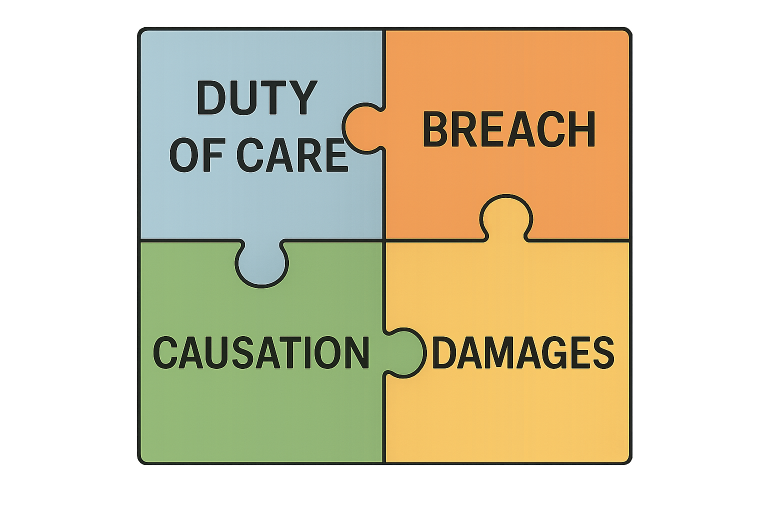
Successfully proving fault in a personal injury case hinges on demonstrating four specific elements. Each one must be established for your claim to move forward.
- Duty of Care: The first step is to show that the defendant had a legal obligation to act in a way that avoided causing harm. Examples include a driver’s responsibility to obey traffic signals or a property owner’s duty to maintain safe premises.
- Breach of Duty: Here, you must show the defendant failed to act prudently or broke the rules that would have protected others from harm. For instance, texting while driving or failing to shovel ice from a walkway can serve as evidence of a breach.
- Causation: A plaintiff must prove that their injuries resulted directly from the defendant’s breach of duty. The court considers whether the incident would have happened if not for the defendant’s actions.
- Damages: There must be evidence that the victim suffered actual losses. Medical bills, lost wages, property repair costs, and pain and suffering can all be considered damages in a personal injury case.
Fulfilling every element is essential. Missing any one of these steps may result in a dismissed claim or reduced compensation. Legal professionals note that these elements often require detailed evidence and expert testimony to be established clearly.
Gathering Evidence to Support Your Claim
Strong evidence forms the backbone of any personal injury claim. Courts rely on factual proof to assess the situation objectively, so carefully collecting and preserving evidence is critical from the outset of your case. The following types of evidence are most commonly used:
- Photographic and Video Evidence: Taking clear photos and videos of the accident scene, visible injuries, property damage, and the surrounding area will document the extent and context of the incident.
- Witness Testimonies: Gathering the names and statements of individuals who observed the accident can offer invaluable outside perspectives and support your version of events.
- Medical Records: Accurate, timely medical documentation is necessary to demonstrate the severity of the injuries and create a direct link to the accident. Detailed records from physicians and specialists help provide an objective account of your recovery and future needs.
- Police Reports: Law enforcement reports contain incident details, citations, and the responding officer’s assessment of fault. These documents are given significant weight during insurance negotiations and court proceedings.
The Role of Expert Witnesses
Expert witnesses can be pivotal in clarifying complex issues. Medical experts may explain the extent of an injury or how it likely happened, while accident reconstruction specialists use scientific methods and technology to demonstrate causation. Their impartial opinions often provide clarity where there is dispute or ambiguity about the facts. For more insight into the importance of objective experts, resources such as Nolo’s legal guide to expert witnesses are highly informative.
Understanding Comparative Negligence
Comparative negligence laws can significantly impact how much compensation a plaintiff receives. In states that follow this rule, the compensation is reduced by the percentage of fault assigned to the plaintiff. For example, if the injured person is considered 20 percent responsible for the incident, their total award will be decreased by that same amount. Understanding how comparative negligence rules are applied in your jurisdiction is vital before you begin litigation.
Common Pitfalls to Avoid
Personal injury claims can falter due to avoidable missteps. Some of the most common mistakes include:
- Delaying Medical Treatment: Any hesitancy in seeking care may cast doubt on the legitimacy or severity of your injuries.
- Inconsistent Statements: Varying accounts given to insurance adjusters, doctors, or authorities can undermine your case and make it harder to prove fault.
- Posting on Social Media: Sharing details or photos online may be used as evidence against you, especially if they contradict claims made in your lawsuit.
Seeking Legal Assistance
The legal process for claiming personal injury compensation can be arduous and confusing. Consulting a skilled personal injury attorney is often a wise choice, especially when significant injuries or financial losses are involved. A qualified lawyer helps guide you in gathering evidence, interviewing witnesses, negotiating with insurance companies, and presenting your case in court if necessary. This support ensures you do not overlook crucial steps or legal rights. For further reading, the American Bar Association provides a helpful overview of the personal injury law process, breaking down what to expect from start to finish.
Conclusion
Building a strong personal injury case requires a clear understanding of legal principles, careful evidence collection, and attention to detail. Proving fault involves methodically establishing each element of negligence and directly linking the defendant’s actions to your injuries. By avoiding common mistakes and seeking out knowledgeable legal counsel, you can maximize your chances of a favorable outcome and fair compensation for your losses.
